
Three ways with beans
Join our next Cook-Along and learn three comforting bean recipes, all with ingredients you already have at home

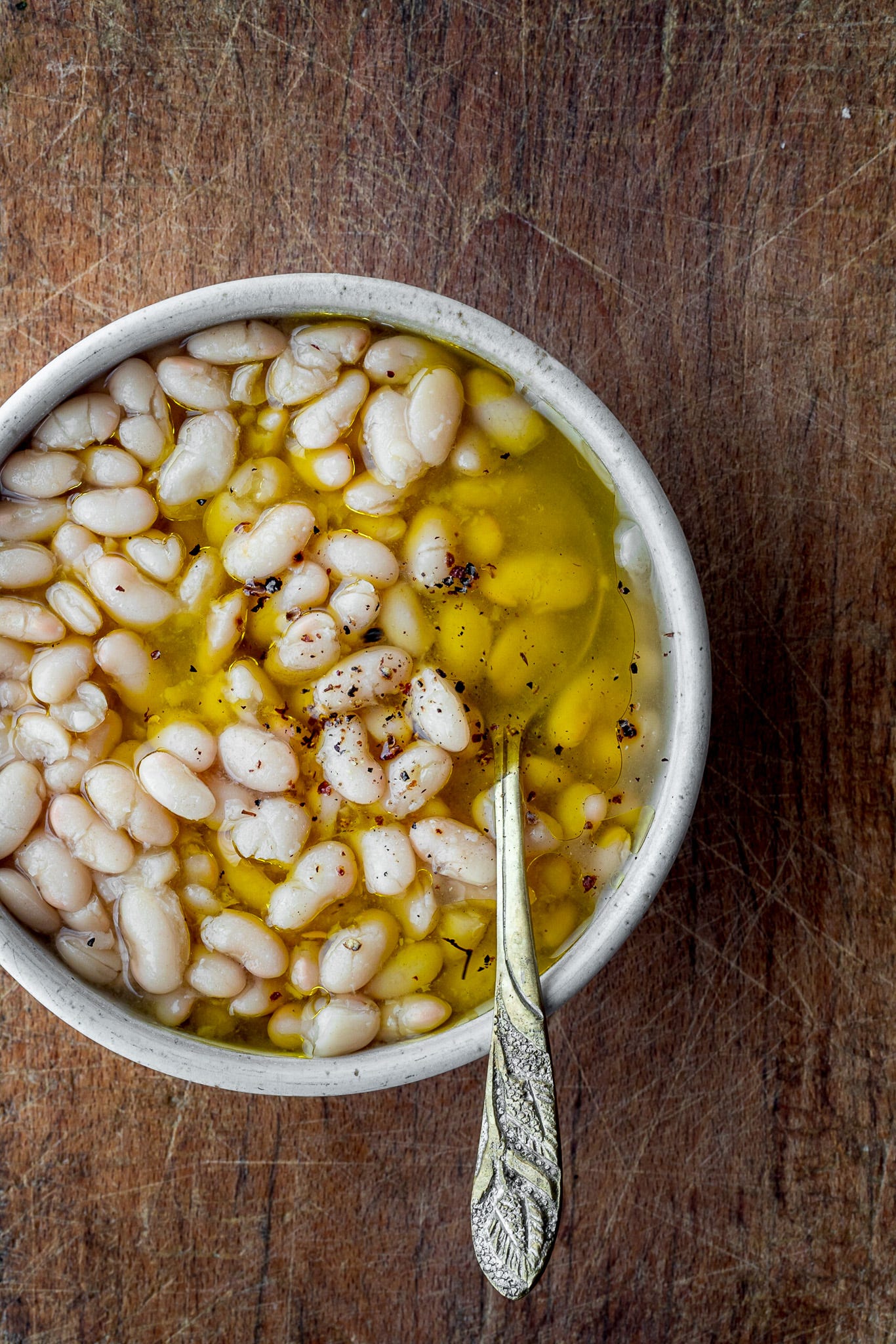
In Tuscany, beans are a pantry staple, the delicious beginning of many a meal, a market treasure, and a link to generations past.
Florentines are often called by the nickname mangiafagioli, meaning “bean eaters”, given their immense love for beans. In truth, though, all Tuscans are fond of beans, and each obviously has his or her favourite: the red beans of Lucca known as lo scritto, cannellini or zolfini. And farmers markets are just the place to find beans characteristic of the area.
Given their protein content, beans are a worthwhile substitute for meat, and as such feature in numerous peasant recipes, from ribollita, the hearty winter soup with vegetables, Tuscan kale and stale bread, to fagioli all’uccelletto, where the beans are cooked with garlic and sage, from passato di fagioli, bean purée with sage, olive oil and a hint of tomato paste for colour, to a staple such as pasta e fagioli, a bean and pasta soup.
Beans can be cooked in a fiasco—a repurposed large glass wine bottle—or in terracotta pots left to cook overnight in the embers of a wood-fired oven. But they can also come from a jar or a can, or quickly cooked in a pressure cooker after soaking them overnight.
Beans also announce the arrival of olio nuovo, the freshly pressed olive oil: I’ve already made the bruschetta with cannellini beans, juicy cooked kale, and a generous drizzle of olio nuovo a couple of times. Best dinner ever!
Beans are humble but mighty: they stretch a meal, nourish deeply, and adapt to whatever you have on hand. No wonder they’ve fed Tuscan families for centuries.

Speaking of beans, do not miss this old New York Times archive article written by Umberto Eco, a renowned Italian philosopher, on the role of beans in human evolution: How the Bean Saved Civilization.
We believe that the inventions and the discoveries that have changed our lives depend on complex machines. But the fact is, we are still here -- I mean we Europeans, but also those descendants of the Pilgrim Fathers and the Spanish conquistadors -- because of beans. Without beans, the European population would not have doubled within a few centuries, today we would not number in the hundreds of millions and some of us, including even readers of this article, would not exist.

Also, if you have Cucina Povera, know that there’s a whole chapter dedicated to plant proteins, with recipes like Tuna and Bean Salad, Fava Bean Puree with Chicory, or Ribollita, Bean and Lacinato Kale Soup. And, by the way, it is currently discounted on Amazon.
You can find all the links to purchase Cucina Povera—including from many wonderful independent bookstores—on the blog. And if you happen to spot the book in a shop near you, please take a photo and share it with us. It’s like travelling vicariously through your snapshots!
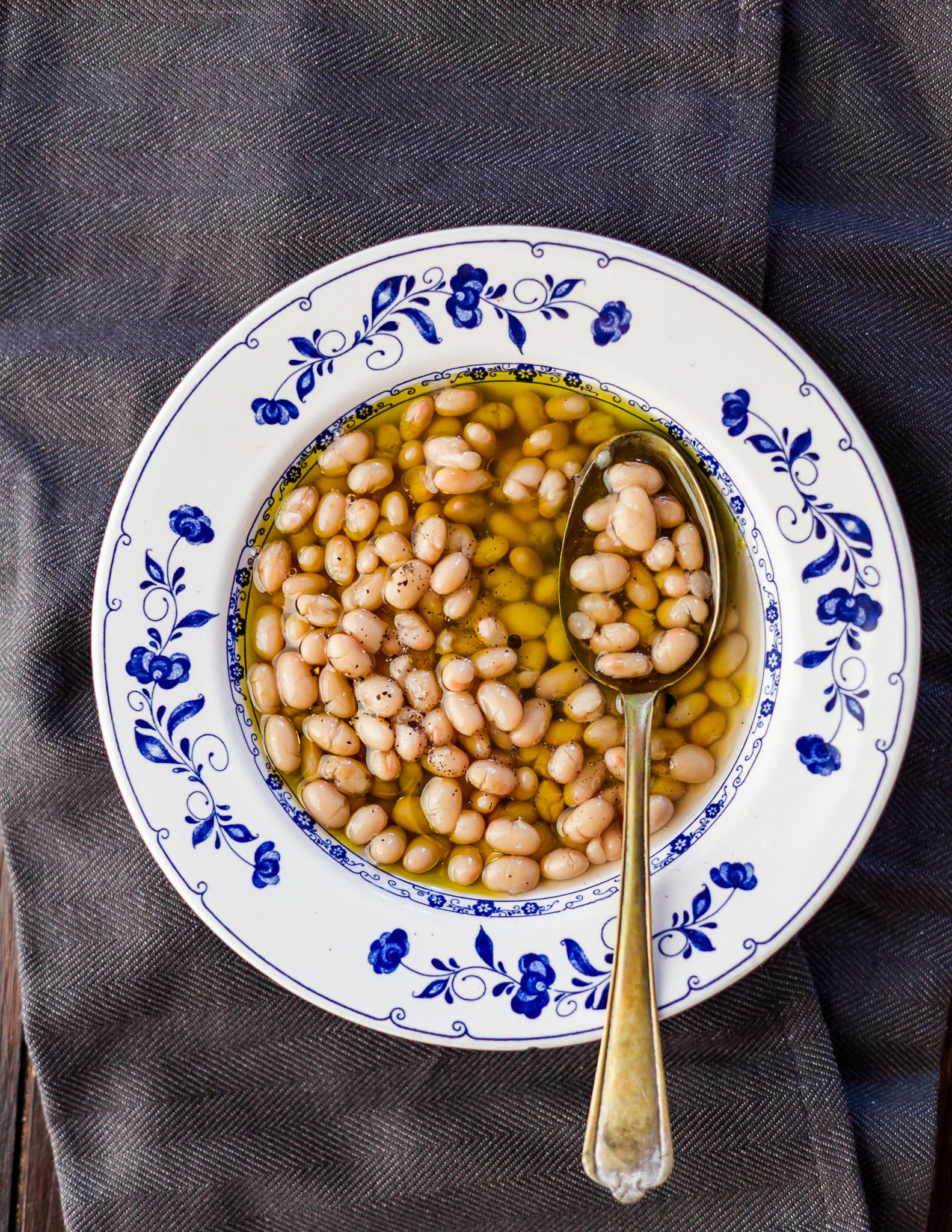
Sunday Cook-Along: A jar of beans… three recipes with pantry staples
We chose beans as the protagonist of our next cook along. During the live class, I’ll walk you through not only how to cook beans from scratch, but what to do with a jar of beans fished from your pantry: a simple bean passato (a thin, creamy soup), a hearty pasta e fagioli (a thick bean and pasta soup), and fagioli all’uccelletto, a Tuscan bean side dish, with or without sausages.
This session is exclusively for paid subscribers. Can’t make it live? Don’t worry, a recording of the class will be available to all paid subscribers afterwards.
You’ll find the video right here on Substack, in our growing archive of Cook-Alongs, perfect for revisiting your technique for making potato gnocchi, orecchiette, tortelli, tagliatelle, ricotta gnocchi, risotto, pork loin, and more.
✨Whether it’s your first time or you’ve been with us since the beginning, I’m so glad you’re here.✨
So, what’s a Cook-Along, you ask?
It’s a live online cooking class where we make a recipe together in real time, once a month. You can cook along from your own kitchen, ask questions, share your progress, or just watch and take notes. It’s relaxed, interactive, and the closest thing to cooking together in person in our studio in the Tuscan countryside. Aprons on, cameras off or on, no pressure at all. And in the end, you’ll have something delicious to share at your table.
So, will you be joining us?
💬 Let me know in the comments, and if you haven’t yet, subscribe to unlock the full experience: the detailed recipes, the live Cook-Along link, a printable prep sheet, and the class recording.
Everything’s waiting for you just behind the paywall, including the recipes for passato di fagioli, a creamy bean soup, pasta e fagioli, and fagioli all’uccelletto.