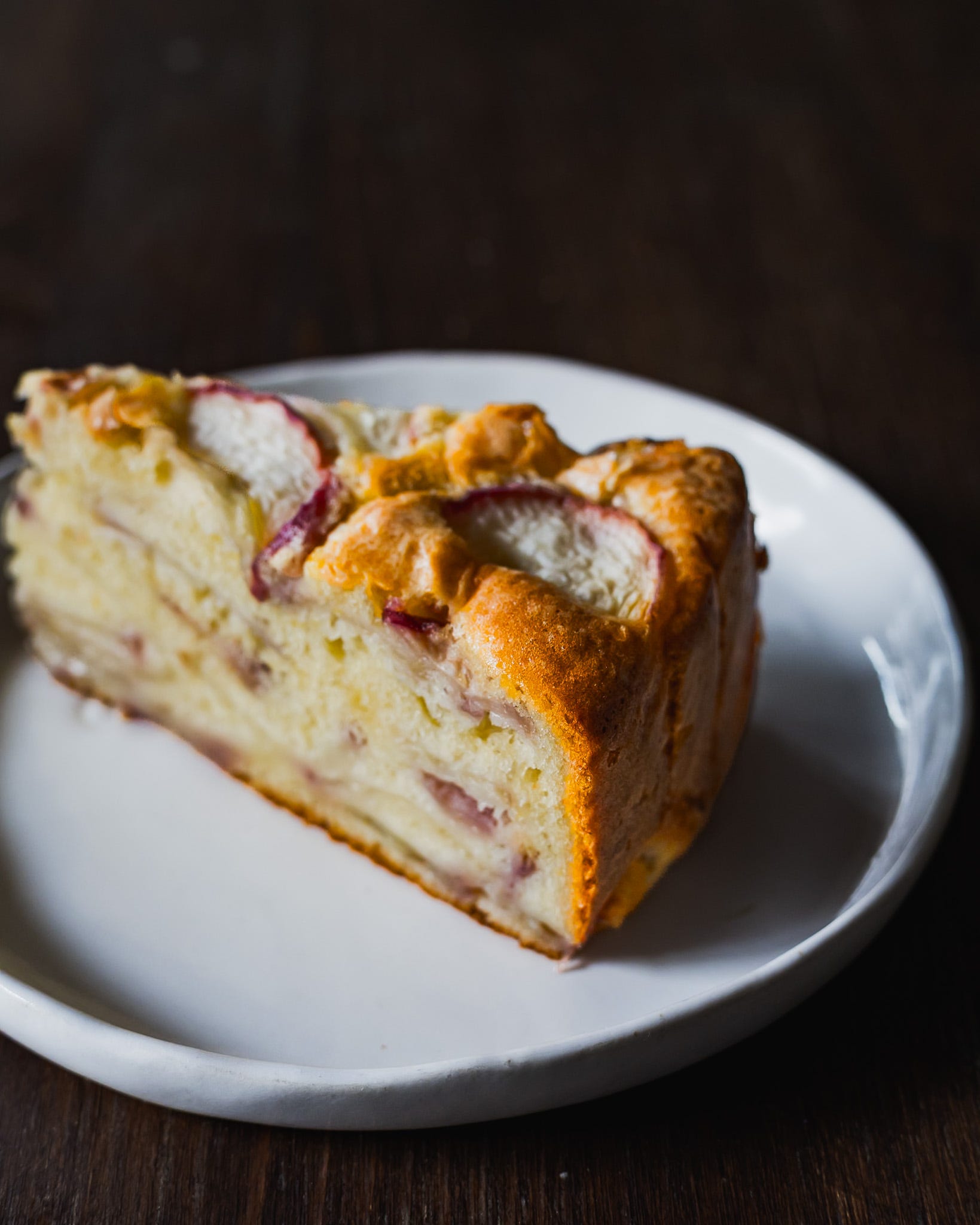
When baking feels more like cooking
Simple cakes and desserts for when you miss baking, but not the fuss, plus a recipe for peach olive oil cake

Today’s newsletter was born out of some free and liberating writing inspired by the #1000wordsofsummer project by Jami Attenberg. Even though I have not been consistent as I wished I would be, it is still a daily reminder I can use my time to craft words, investigate my desires, and follow the thread of an idea before it disappears.
There was a time—when I started my blog, when I was still living with my parents in my beloved mansard bedroom over the kitchen, when I was single and had plenty of free time to invest in leisure activities—when I would pick weekend baking projects.
I would leaf through my cookbooks, magazines and favourite blogs to choose my adventure for the day. A dark chocolate meringue tart from Donna Hay, a red velvet cake dusted with shredded coconut, or even a tiramisu where I made everything from scratch, including baking the ladyfingers and making mascarpone cheese out of fresh cream with the help of a few drops of vinegar.
It was the time of the Daring Bakers Challenges, were you around on the internet back then? It was fun—and as the name suggests—daring and challenging. The organizers of the monthly online event would choose complex projects, preferably with several steps, each teaching something: a technique, a traditional recipe, an interesting pairing. Thanks to this project, I made chocolate pavlovas, a baked alaska with pistachio ice cream and brown butter pound cake that my uncle is still raving about after 16 years, a piece montée, and even a Biscuit Joconde Imprime to wrap around an Entremets dessert.
I learnt a great deal of techniques joining the online challenges, not least the ability to read a recipe and follow it step by step.
Those times are gone now, though.
Fast forward 16 years, and here I am, living the life I have always wanted, married to the love of my life, Tommaso, with an almost six year old daughter, a dog, and a family business that keeps us very busy, especially during the high season of cooking classes (which is precisely now).
What I am really missing now, though, is not just the time, but the mental space to tackle one of these projects. More than once, full of enthusiasm and high hopes, I have embarked on a baking adventure, only to discover hours later that I had misjudged the time, the focus, and the fridge space it required.
There will be a time when I will be able to fully dedicate myself to this kind of project again, but it is not now.
Cooking is different. My style of cooking, at least. It is based on improvisation, on problem solving skills, on seasonal pairings and on classic, reliable recipes I can riff on when in need. This is what I try to teach during our cooking classes, too.
I’m still a scale-loving kind of person, as I measure all my ingredients even when I cook, but I appreciate the improvisation, the let me see what happens if I substitute eggplants with butternut squash here approach.
Even though I do not have the time and mental space for the most daring baking projects, I still love baking a cake during the weekend.
What I love most is finding recipes where baking feels closer to cooking, where you can rely on the same intuitive approach. Luckily, many of the classic Tuscan cakes I grew up with, and that I still love today, belong to this tradition. These are often the cakes I I make more often during my cooking classes.
When my students introduce themselves saying I’m not much of a baker, or even I’m scared of baking, this is really not my thing, I challenge them with one of these recipes, a set of instructions that resemble a rough plot outline more than a proper, daunting baking recipe. At the end of the class they are always genuinely surprised, happy to add a simple seasonal cake to their baking repertoire, a cake they feel confident about.
This is the baking I love these days: simple, straightforward, often something you can make with just one bowl and my trusty pale green electric beaters, possibly seasonal, bursting with fruit, with a rustic appeal given by nuts, warming spices, and herbs.
If you are like me, these are some baking projects you might actually enjoy and have the time/mental energy to make. These cakes do not ask for a whole afternoon, a perfectly clear mind, or a fridge emptied in advance.
Most of them are torte da credenza.
These are cakes that were meant to be kept on the dining room sideboard, closed into the glass display cabinet where our grandmas would store china, crystal, linens, and serving dishes.
Kept at room temperature, outside the fridge—or, more accurately, from a time before every household had a fridge—torte da credenza are made with simple pantry staples: flour, sugar, eggs, olive oil, or butter. They usually have no filling, no pastry cream, no whipped cream, though they can include jam, fruit, nuts, chocolate, or spices. Think about apple cakes, ciambellone, pound cakes, jam tarts, nut biscotti, sponge cakes, carrot cakes…
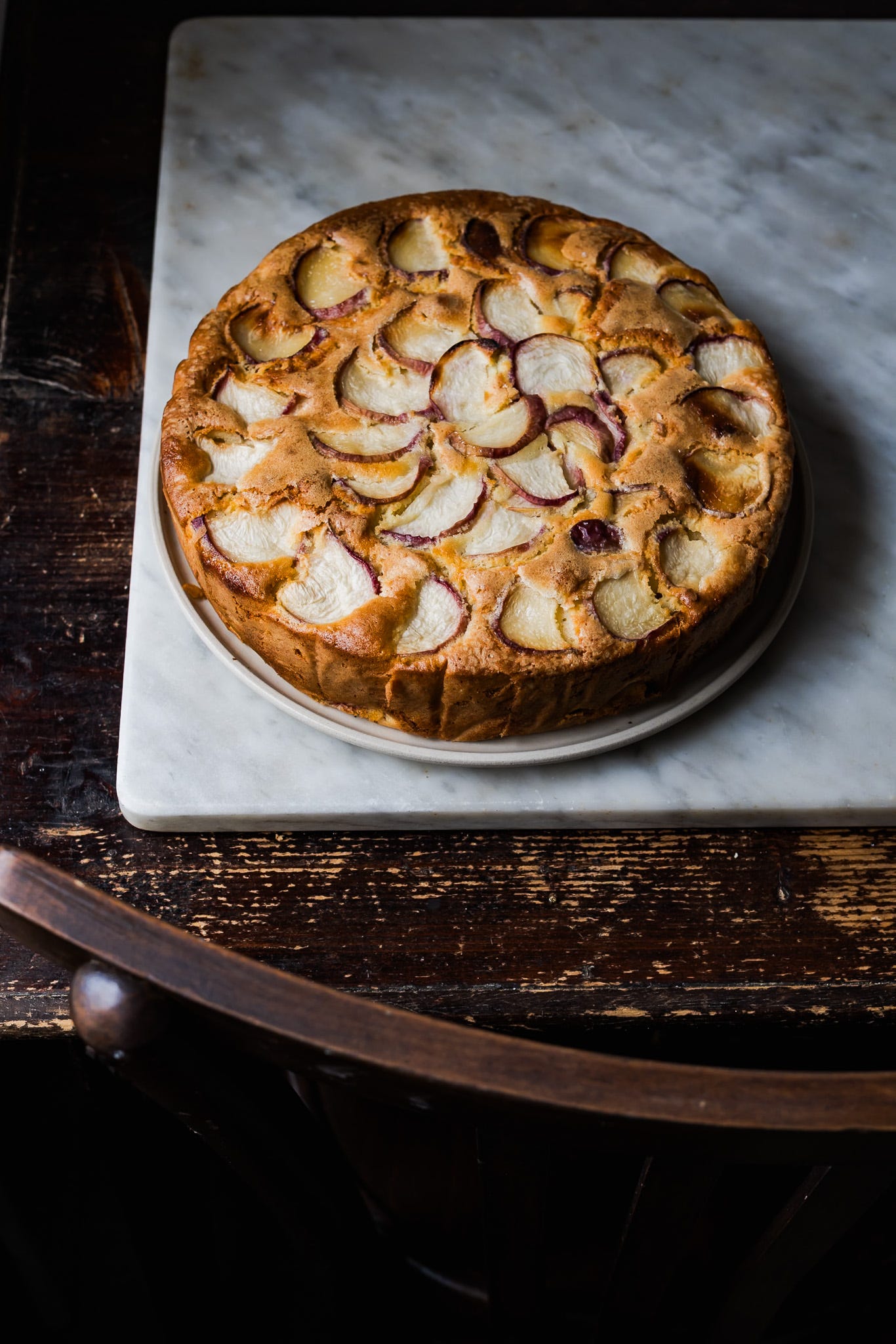
White peach olive oil cake
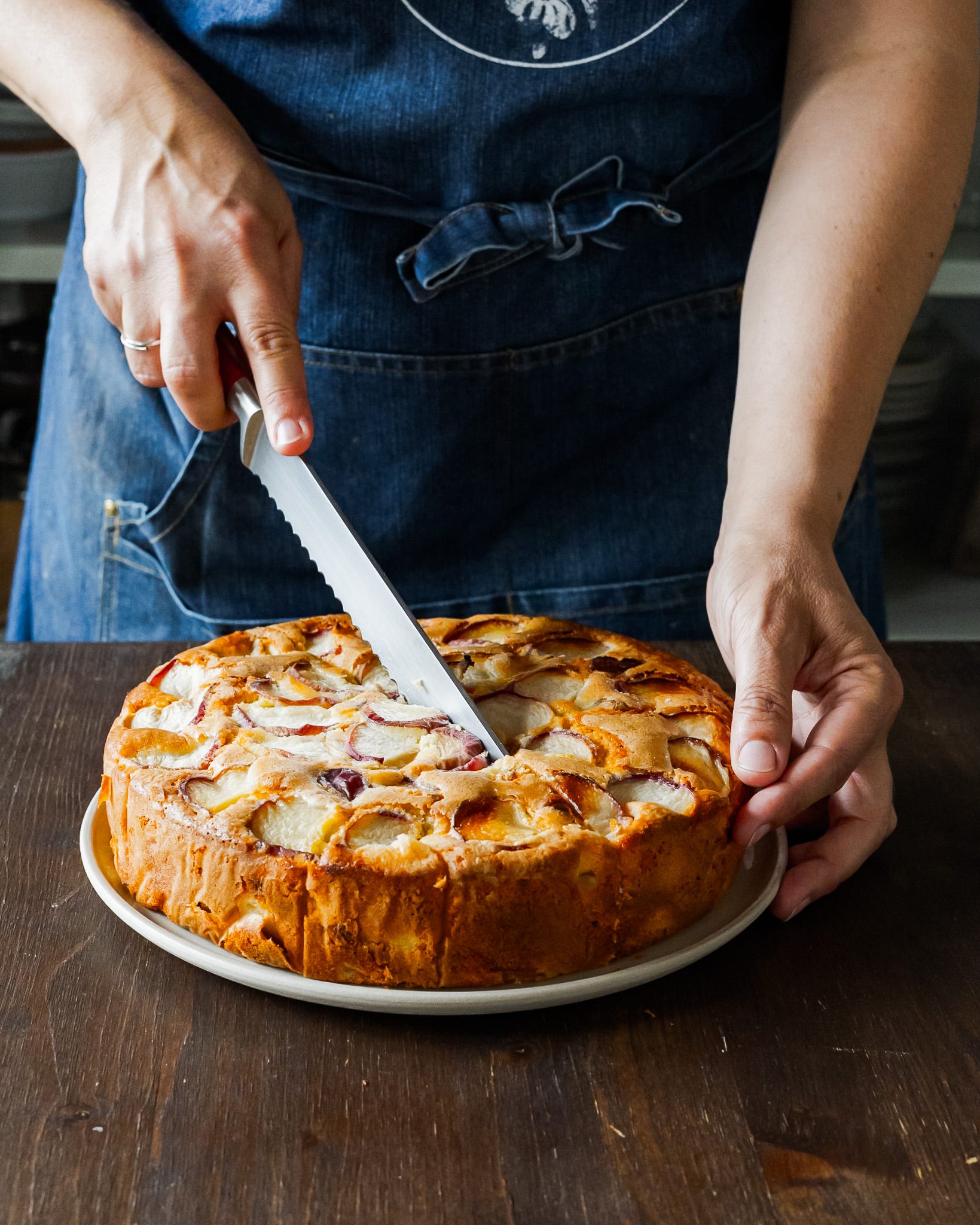
Take this white peach olive oil cake I just baked during a cooking class. It is the summer variation of my apple olive oil cake, tender and bursting with fruit, with a gentle hint of lemon and vanilla.
You can make it in one bowl—two, if you count the bowl where you slice the peaches—with the help of an electric mixer.
To make it feel a little more special and elegant with almost no effort, add a teaspoon of finely minced rosemary—I love the combination of rosemary and peaches—or a pinch of lavender.
This cake also works well with other firm seasonal fruit, such as nectarines, apricots, and pears. For a chocolate olive oil pear cake, replace two tablespoons of flour with the same amount of cocoa powder, and add a handful of chocolate chips to the batter.
Scroll to the bottom to get the recipe behind the paywall. I also included the video on how I line my cake pan with parchment paper. Several people during our cooking classes define the moment when they see it life-changing!
Here a few examples of cakes, cookies, and simple desserts you can approach almost as you would approach dinner.
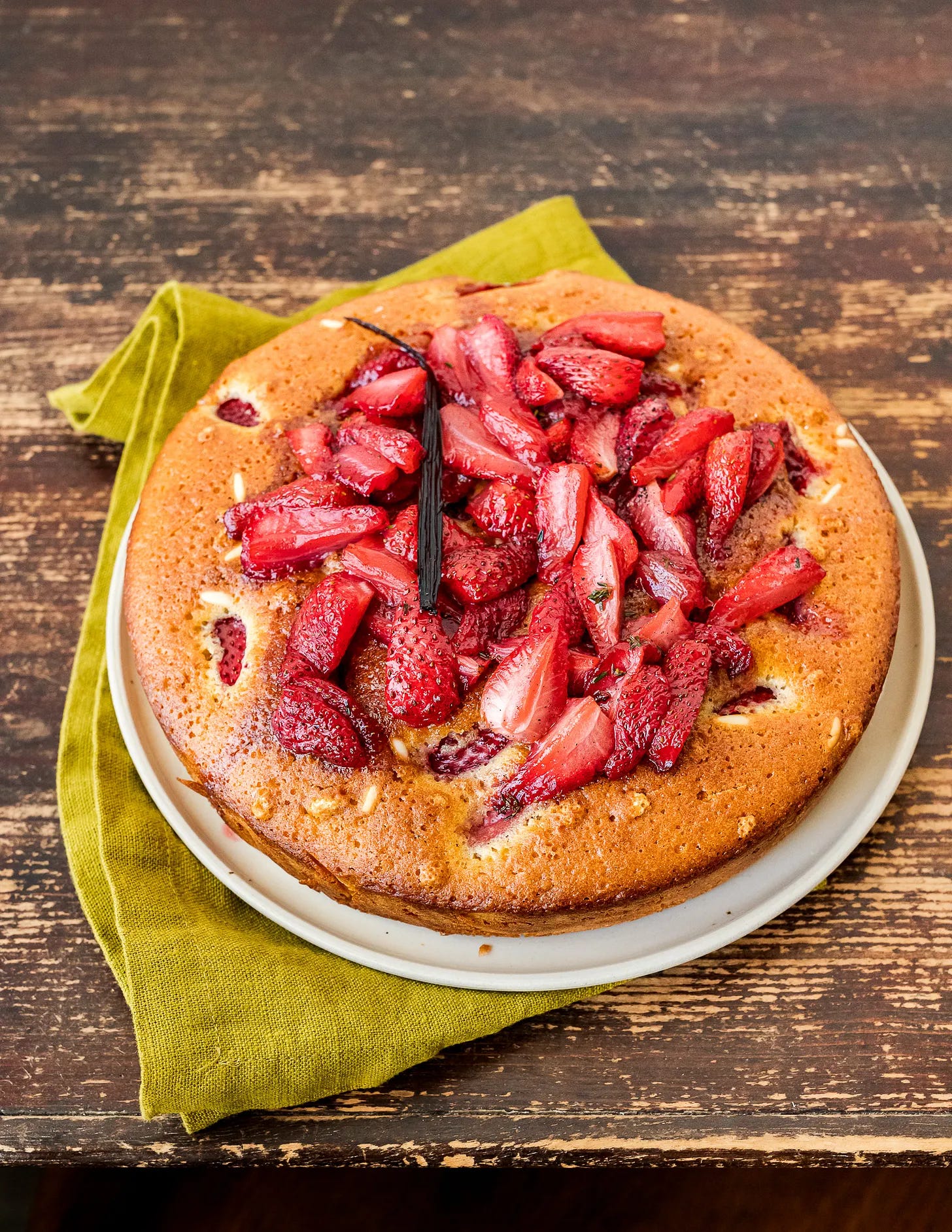
Extra-virgin olive oil pound cake with roasted strawberries. This is probably the cake I make more often, the most appreciated during our cooking classes, but also the one I rely on when I don’t have a clear idea on what to bake. It calls for very simple ingredients, from your pantry, and it can be crowned with seasonal fruit.
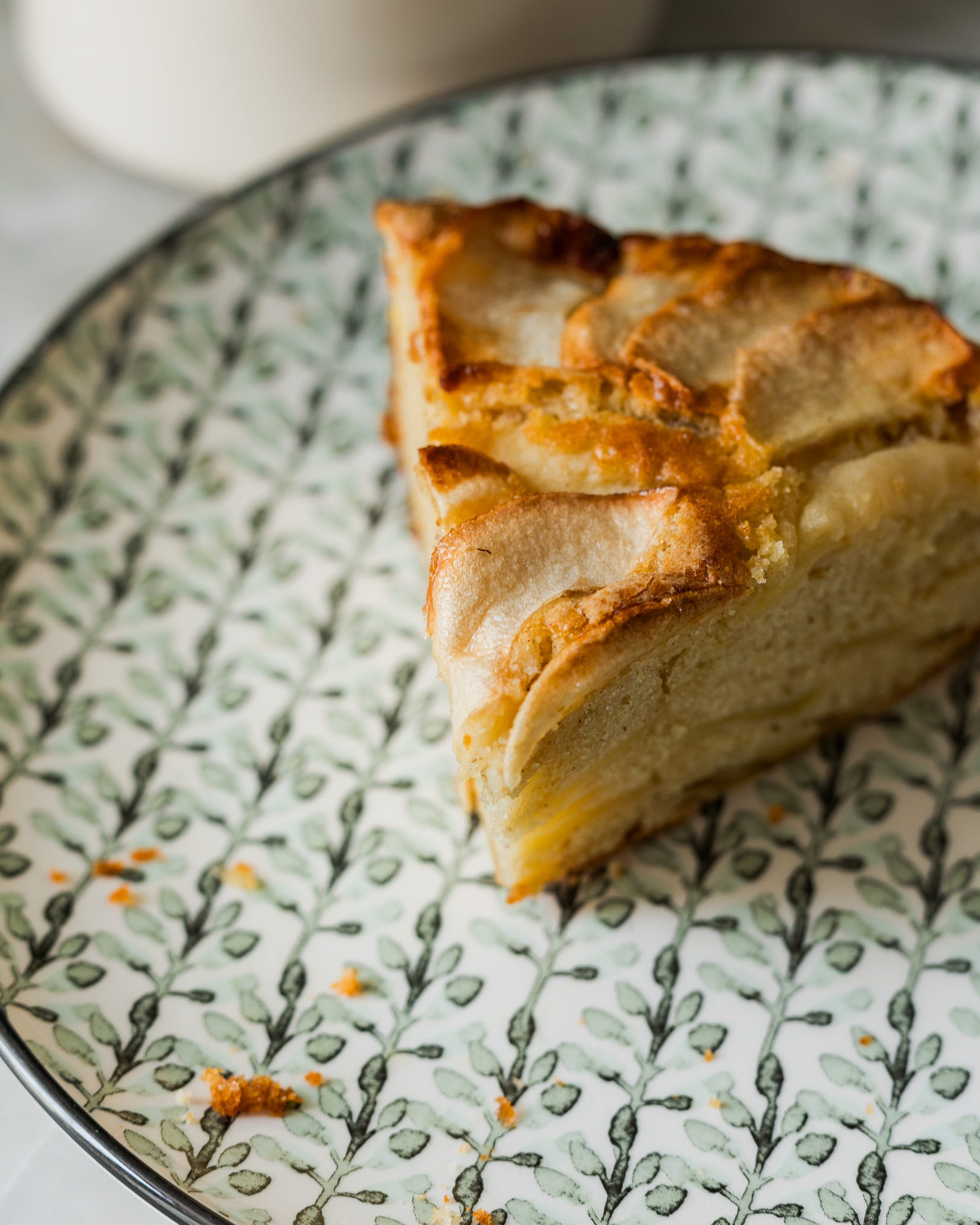
Lemon ricotta cake with pears. This is my reliable recipe for lemon ricotta cake. To make it more seasonal, I added a ripe pear, thinly sliced. Omit it, or substitute it with an apple if this is what you have now on your kitchen counter.
Banana bread with extra virgin olive oil, chocolate, and walnuts. Even though banana bread will forever carry a hint of 2020 about it, I have been in love with it since May 2012, when I first made this recipe from Molly Wizenberg’s book. It was her words that convinced me. Of this banana bread, she writes that “it’s the kind of thing that begs to be cut into big, melty slices while the loaf is still hot”, and really, that says it all. And so I did.
Buckwheat cake from Alto Adige. Buckwheat was introduced into Italy in the late 14th and early 15th centuries. It grows well in cold mountain regions, so it soon became a staple for the Alpine area. It is used to make polenta, pizzoccheri, focaccia, and this incredible cake, naturally gluten-free, rich with butter and a grated apple.
Chocolate and clementine olive oil cake. Little by little, I grew fond of this one. We’ve shared birthday parties, quiet afternoons with a cup of strong black coffee, and lazy breakfasts when the day feels reluctant to begin. I love it from the first perfect slice to the last scattering of chocolatey crumbs left on the plate. It’s an uncomplicated cake, as comforting as a friend’s hug or a warm cup of tea. The crumb is soft, almost moist, with a thin, crisp top.
Yoghurt pound cake for breakfast. We’ve been baking this pound cake since Tommaso started making his own yoghurt to use the surplus. We keep a little post-it on the fridge, with the ingredient list scribbles down so that whenever we feel like baking, we have all we need. It must be quite a good cake, if it won its space on our fridge, among polaroids, postcards and the magnets we collected during our past travels.
Apple olive oil cake. This is the cake I make most often throughout the year, as it is Livia’s favourite. Once you bake it, you’ll understand why.
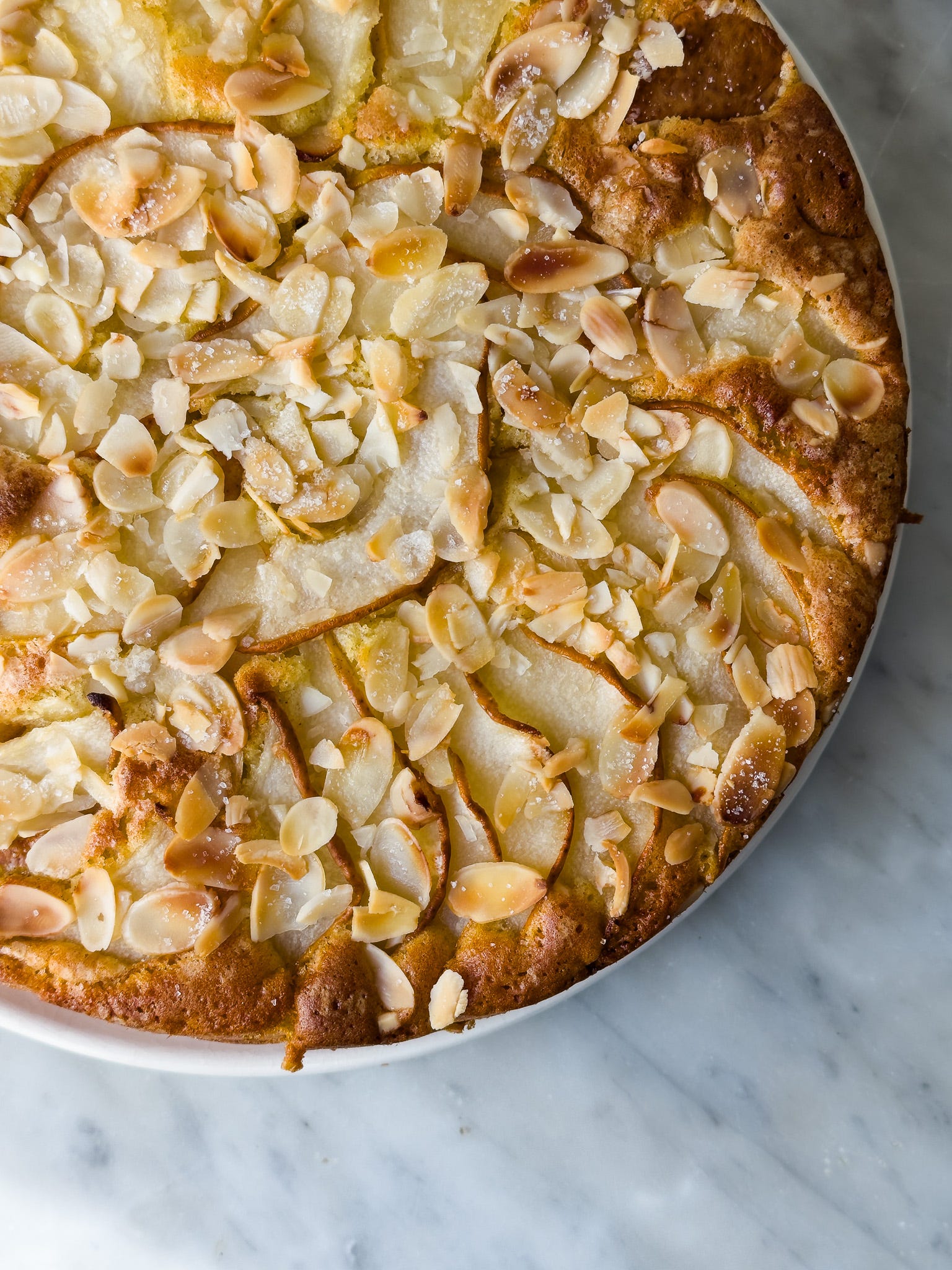
Pear and almond cake. It has everything I love in a cake: it is bursting with fruit, – I chose summer baby pears -, it has a rustic texture given by almond flour and almond flakes, and a subtle lemon scent. And according to Niki Segnit, in her The flavour thesaurus, pear and almond are a natural couple: classy and restrained.
Chestnut flour and chocolate biscotti. Turn the traditional Tuscan almond biscotti into a Fall treat. Substitute part of the all-purpose flour with chestnut flour, add the zest of an orange, and a generous amount of dark chocolate chips. Serve them at the end of a meal with a tiny glass of vinsanto, the Tuscan dessert wine, or an espresso, or enjoy them in the morning to begin the day with a boost of energy.
And then, because not every simple dessert needs to be baked…
Tiramisù allo zabaione. This is a quicker version of a classic tiramisu, made with vinsanto sabayon and mascarpone. I like to enhance contrasts when I make tiramisù: the creamy, silky, sweet mascarpone and sabayon cream is balanced by the unsweetened coffee, and the crunch of dark chocolate. It makes every spoonful interesting and surprising.
I’d love to know about your own relationship with baking, and whether you have desserts like these: simple ones, for those times when you don’t have much time, focus, or mental space. I’ll be reading your thoughts in the comments, or by email if you’d rather reply to this letter directly.