
The roots we bring home
From Salento to Basilicata, a family map made of sea, wheat fields, memories, and onion focaccia.

Here we are, back home, and back to my morning walks before everyone else wakes up. At seven, the light is low and slanting as I walk briskly through fields coloured with an almost dreamlike shade: on one side, a field of alfalfa, an unusually bright green in a countryside already scorched by the sun, shifting with its mauve and bluish-purple flowers; on the other, a fallow field, golden at the base with wild grasses, but dotted with chicory flowers—so difficult to recognize in spring when you are just beginning to learn foraging, and yet so unmistakable now, standing tall with its indigo blooms.
Over the past ten days, my morning walks have looked very different: no soil beneath my feet, but sand. No wheat fields or bramble hedges, but the crystal blue sea of Salento on one side, and on the other low, squat white houses, oleanders, palm trees, and the splashes of colour from the fluorescent pink bougainvillea lighting up hidden gardens.


This year we chose to spend our holidays in Salento again, as in the past five years: to nurture our bond with one side of the family, one Livia is already deeply attached to; to return to a place that by now feels like home away from home; to continue our search for the best pasticciotto — and I think I may have finally found it — to see familiar faces again, and to pretend, for ten days a year, that we live there.
By the time we have our first swim in the sea, we are already back in the rhythms of that house: towels left to dry over plastic chairs, the outdoor shower in the courtyard beside the towering lemon tree, meloncelle — small, pale-green Apulian melons eaten raw like cucumbers —, meloncelle everywhere.
In the morning, I love buying vegetables from the same stall in the car park by the sea. I love hugging friends who, year after year, are still there on our beach near the house, chatting while dipping their feet in the cold spring water. I love discovering new little coves that instantly become our favourites, because they are far from the crowds and the loud music of the busier beach clubs.


We have our rituals: the pasticciotti I buy still warm in the morning and bring back from my walk, our trip to Lecce to buy ceramics from the Gigante sisters, coffee over ice with a view of the sea. And then, on our last evening, pizza on the beach with the whole family, ordered from the pizzeria at the end of the road, seasoned with sand and laughter, piping-hot chips passed from hand to hand, the sunset in front of us.
What I feel for Puglia — or, to be more precise, for Salento — is what my Tuscan-born grandmother must have felt for Basilicata, the land of my grandfather Biagio.
Even though there is no blood tie, from the very beginning I embraced Tommaso’s family, their web of kinship, their ingredients, their habits at the table, and their recipes, which little by little have become part of my own cooking repertoire, gathering along the way a deeper layer of shared stories and memories.
Every year, our holiday becomes a chance to shape our own identity as a family, and to discover a new piece of the puzzle, whether it is a dish — tubettini with mussels, or pezzetti di cavallo, a horse meat stew — sometimes an obsession — the pasticciotto, again — a beach, an aunt or cousin we had not yet met, a story from the past, or a town.


Lecce — with its white stone, where the light seems to reverberate at every hour of the day — remains my favourite city, because it has managed to preserve an identity that has not been entirely flattened by tourism, as has sadly happened to other beautiful towns in Salento. This year, though, I also left a little piece of my heart in Taranto, a city that does not sweep its problems under the rug or hide them behind a coat of white paint.
I loved the seafront, the fried mussels, and the old town, where at times you felt like an intruder, at others like a spectator of other people’s lives, stealing glimpses behind the curtains of grocery shops, courtyards, and garages. Above all, there was the coconut scent of fig leaves baking in the sun, growing out of ruined buildings and between the cracks in the walls.


On our way home, we stopped in Basilicata, in Melfi, to visit my aunt and uncle.
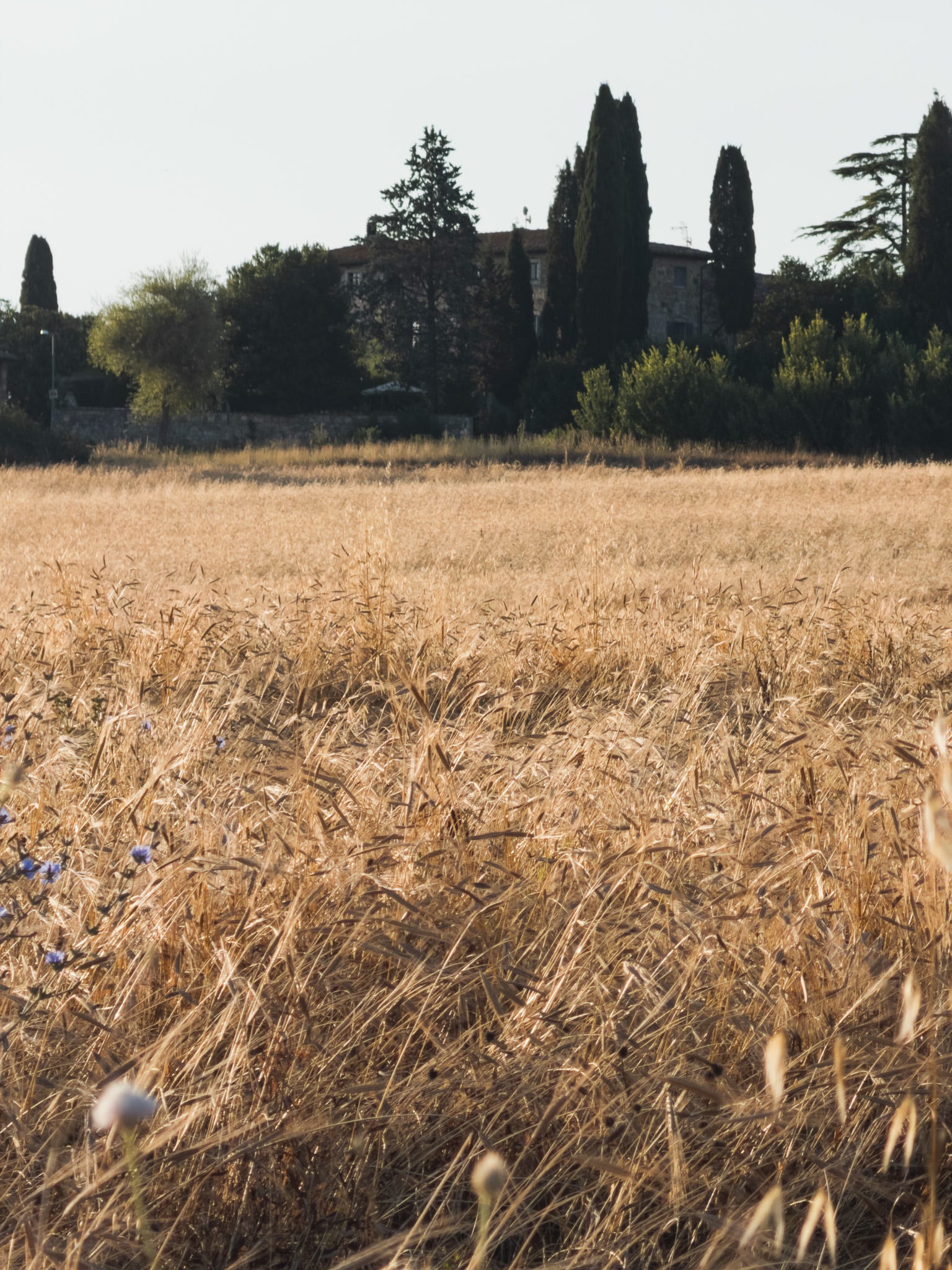
Driving to Melfi from Salento, you cross endless wheat fields: no trees, only field after golden field, dotted here and there with abandoned farmhouses. Then come the wind turbines — “Look, Mamma, a windmill!” Livia exclaimed — and as you begin to climb up the slopes of Mount Vulture, the landscape changes again: the volcanic soil, dark and fertile, the kind you want to sink your hands into; the chestnut woods; and, suddenly, unexpectedly, lush vegetation.
I spent only a few weeks in Melfi with my grandparents during the summers when I was a child, and after that, only brief visits. And yet twenty-four hours were enough to rekindle old connections, polish long forgotten memories, and awaken the desire to know the land of my grandfather Biagio better.
With Basilicata — or, to be precise in this case too, with the Vulture area around Melfi — it is a matter of recognition, and of rediscovering a sense of belonging. Caciocavallo cheese and calzoncelli, salted bread with its dense yellow crumb and dark, crisp crust, the slightly sparkling Gaudianello water, which I did not like as a child but now find extraordinarily thirst-quenching, baccalà and chestnuts, game and peperoni cruschi, Basilicata’s sun-dried sweet peppers, fried until crisp.
As always, food is my favourite way to come to know a place, to recognize it, and to let stories and bonds resurface.
Food contains the light and shade of a region; it can offer you a fuller view, one that goes beyond stereotypes. What I am looking for is not the slow-life postcard, the grandmothers dressed in black sitting on wooden chairs, chatting outside their front doors.
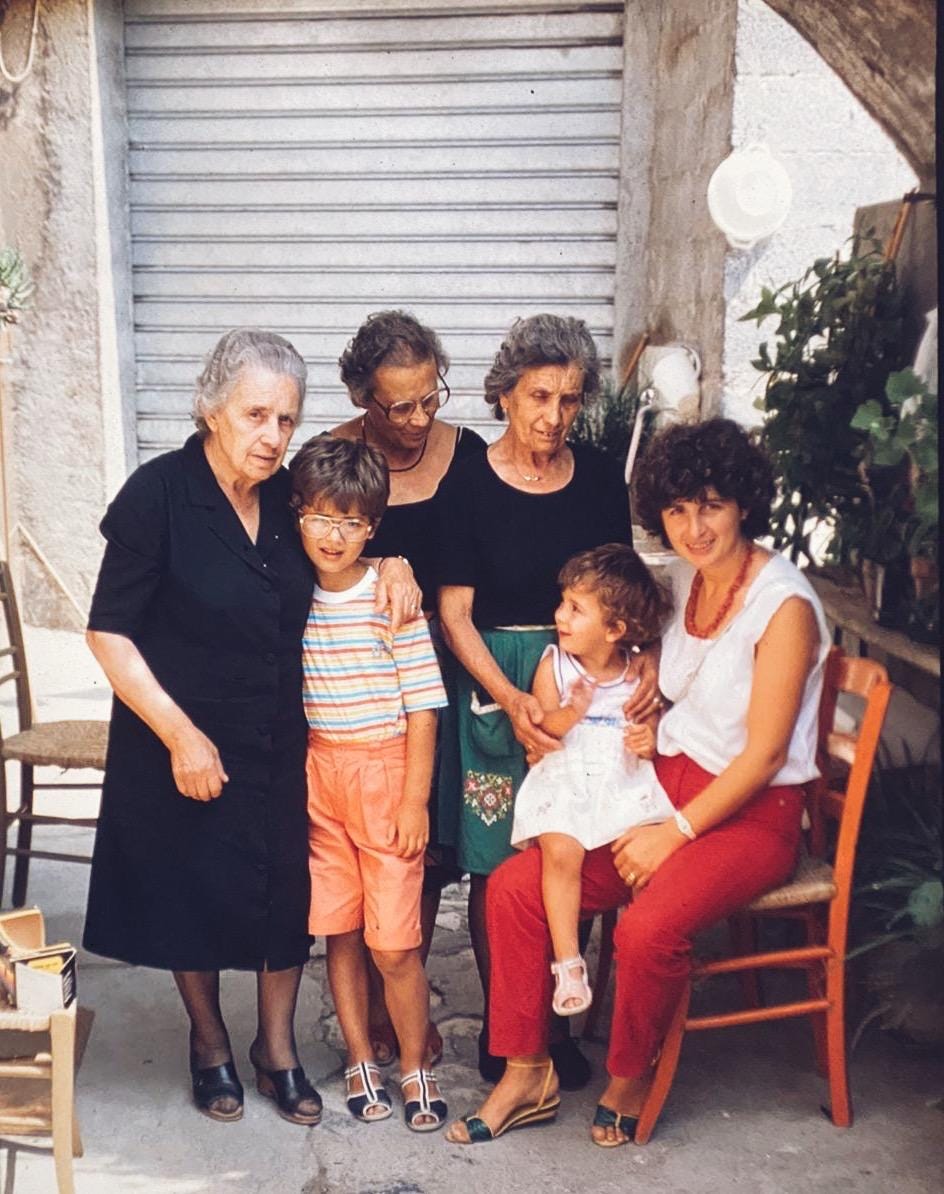
That image is still there in my eyes — and in the photographs from my childhood — but in the album of my memories I place it alongside other stories, too: those of people who had put all their hopes in the driving force of industry, and now find themselves dealing with layoffs and wage-support schemes; and those of people working in hospitality in a splendid region that still lacks adequate infrastructure, and a tourism system that could make it not more attractive — because it already is — but more accessible, easier to experience, for a broader audience.
We left with the certainty that we will soon return to Basilicata, too, because I feel the need to explore these Lucanian roots of mine more deeply: roots I feel strongly in my love for dried oregano, and for the lasagne of festive days.
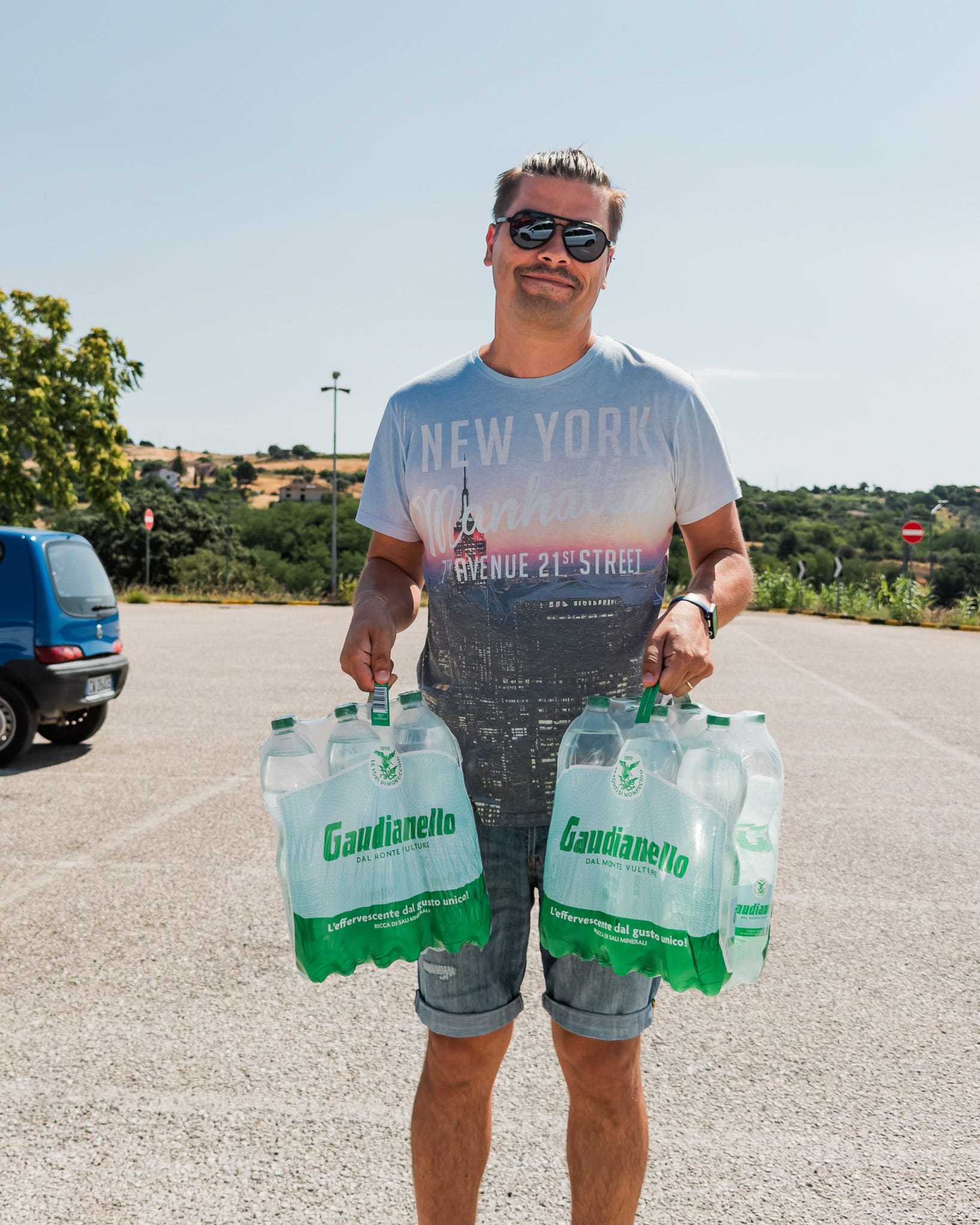
And then we came home, the car loaded with memories, plans, good intentions, and excellent ingredients: almonds, capers, olives, and taralli from Salento; semolina bread, calzoncelli, peperoni cruschi, and sparkling water from Melfi.
Summer is here, and so are we.
Over the next two hot months, we have cooking classes ahead of us — fewer than usual, which may be just as well, given the temperatures — along with the immense immense and deeply emotional task of sorting through my grandmother’s house, which will soon become an apartment we will rent out to those who want to spend a few days on holiday in Val d’Elsa. We will tell you all about that further down the line. There will also be the translation of Vegetables the Italian Way into Italian — FINALLY! but there will be time to talk about that, too — and many new recipes for the newsletter.
I am still reading your answers to the little survey I shared with you — there is still time to reply here, if you would like — and so many interesting ideas and insights are already emerging. Thank you for the time you have given us.
And what about your summer? How is it going?
And now, a new recipe and a few links from the archive: things to read and cook.
I always worry that the recipes I publish here might get a little lost once the newsletter lands in your inbox, but luckily, here on Substack, they live on in the archive, which you can always browse here.
Onion Strudel. My aunt makes a focaccia with these onions, but I like to make a strudel with this sweet, sticky filling.
Sagne a lu’ fuorn’, my family’s Lucanian lasagne for Christmas lunch.
Sagne ‘ncannulate, Tommaso’s nonna’s recipe for curled tagliatelle from Salento
And to continue this journey into our Southern Italian roots, today paid subscribers will find a family recipe: my Aunt Teresa’s onion focaccia, revisited and updated.
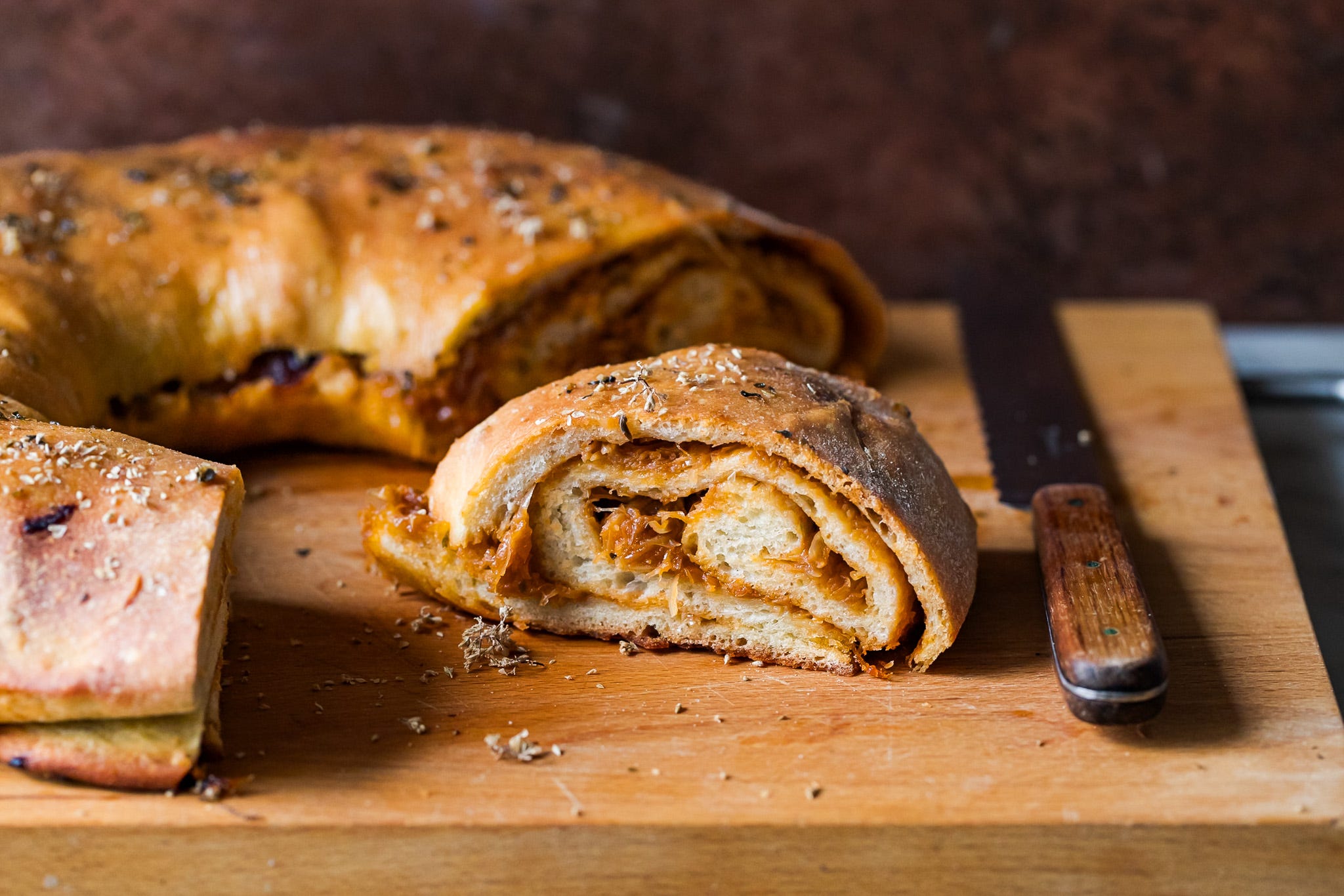
RECIPE. La focaccia di cipolle di zia Teresa
I was born and raised in Tuscany in a tight-knit family where pane sciocco—unsalted, rustic bread—beans, and olive oil were more than just ingredients; they were part of a secular religion. My family’s cooking repertoire, however, was deeply influenced by my grandfather Biagio’s side of the family, who moved to Tuscany from Melfi, Basilicata, in the 1950s.
My Aunt Teresa remains the best home cook in the southern branch of my family—the keeper of recipes, traditions, and memories. Her festive gatherings are crowded, loud, and overflowing with food. Her cooking is recognizable for her use of humble vegetables—especially onions, peppers, tomatoes, and eggplants—, for the thick-crusted, substantial semolina bread with a dense, salted, golden-hued crumb, and for the unmistakable balsamic aroma of dried oregano. Chili peppers and generous amounts of olive oil complete the flavour profile of her cuisine.
One of her most beloved recipes—the one she brings to every family get-together or bakes as an appetizer for celebratory family meals alongside caciocavallo cheese, spicy salami, and pickled peppers—is focaccia di cipolle.
You put me there with you. Lovely
Beautiful writing and photos. Thank you for letting us come along.