A Different Italy: eating through the Alps
What I learned when I tried to write about a cuisine I didn’t grow up with.
A few years ago, while working on Cucina Povera, our 2023 cookbook (it feels strange to think about Cucina Povera as our previous book, with Vegetables the Italian way coming out soon!), I reached a point where everything stopped flowing. I found myself circling around recipes I couldn’t quite connect with. I was in Northern Italy.
I wanted to write a book that could offer a truly comprehensive collection of recipes from across the country, which meant stepping well outside my comfort zone. It meant silencing my impostor syndrome—how could I, a Tuscan raised on saltless bread and olive oil, possibly understand and tell the story of dishes that didn’t belong to my own tradition? My answer, as always in these cases, was to study, research, test, get it wrong, and try again.
Apart from Tuscany—the region where I was born and whose food I grew up eating—writing about Abruzzo, Puglia, Campania, or Basilicata recipes had felt like coming home.
In my DNA—shaped by the meeting of Tuscan and Southern blood—there’s a deep love, almost a reverence, for olive oil, for a certain kind of vegetables, for oregano, capers, and bread, being it white and saltless, or distinctively salty, made with semolina flour.
Even when I hadn’t grown up with certain dishes, I understood their flavour profile, their rhythm, their purpose even. It was like recognising a taste from a memory that didn’t belong to me, yet one I could easily summon through familiarity. I would read a recipe, explore variations from different cookbooks, and come up with my own interpretation. It happened, for example, with spaghetti frittata from Naples or pallotte cacio e ova from Abruzzo.
But the North—especially the Alps—posed a different kind of challenge.
Not because the food wasn’t interesting. On the contrary, I was deeply fascinated by it. It evoked snow-covered landscapes, forests, unfamiliar herbs, and above all, the mystical power of the mountains. Southern and Central Italian food came naturally to me, much like studying English or Italian literature. Northern food felt more like physics: I could see its potential, but it required far more effort and concentration.
Take the basic ingredients. Where I would instinctively reach for olive oil, they used butter. And cheese—so much cow’s milk cheese—while I was more accustomed to cooking either with sharp, aged pecorino or with a younger, softer, milkier version, both made from sheep’s milk. Even the vegetables were different: Tuscan kale for me, Savoy cabbage, potatoes, leeks in the North.
As I always explain during my cooking classes, even a simple, straightforward recipe like tomato sauce can tell you a lot about where you're cooking and which influences are at play.
In the North, it’s usually butter and onion—just like in Marcella Hazan’s iconic tomato sauce, the definitive version for so many in North America. In Tuscany, the choice falls on extra virgin olive oil and garlic, as the other Marcella—my grandmother—used to do. In the South, like in Tommaso’s family in Salento, it’s extra virgin olive oil and onion.
These choices, made almost subconsciously, result in completely different tomato sauces. If my tongue and my stomach instinctively recognise a sauce made with olive oil—whether it starts with garlic or onion doesn’t really matter—as home, they stumble a little when it comes to butter. It’s delicious, of course, but I can’t quite fit it into that mental category of tomato sauce that tastes like home.
The explanation of this different approach to food lies in climate, geography and history.
Here’s a passage I kept returning to while writing this week’s newsletter. It’s from Italian Cuisine: A Cultural History (2003) by Massimo Montanari and Alberto Capatti:
“Europe gradually came into being as a cultural and geographical concept in the High Middle Ages, thanks to the confluence of Roman and Germanic cultures, which had been diametrically opposed to each other up to that time. From the culinary viewpoint, these cultures were very different and may even have seemed incompatible.
While the ideology of the Romans, based on the Greek model, continued to regard wheat, grapes, and the olive tree as instruments and symbols of an agricultural and urban civilization, the Germanic population maintained close links to the forests, on which they relied for most of their food, obtained through hunting, gathering, and raising livestock. The culture of bread, wine, and olive oil clashed with the culture of meat, milk (or beer, at best), and butter, which implied a different balance between humans and their environment, a different way of conceptualizing and using the land.”
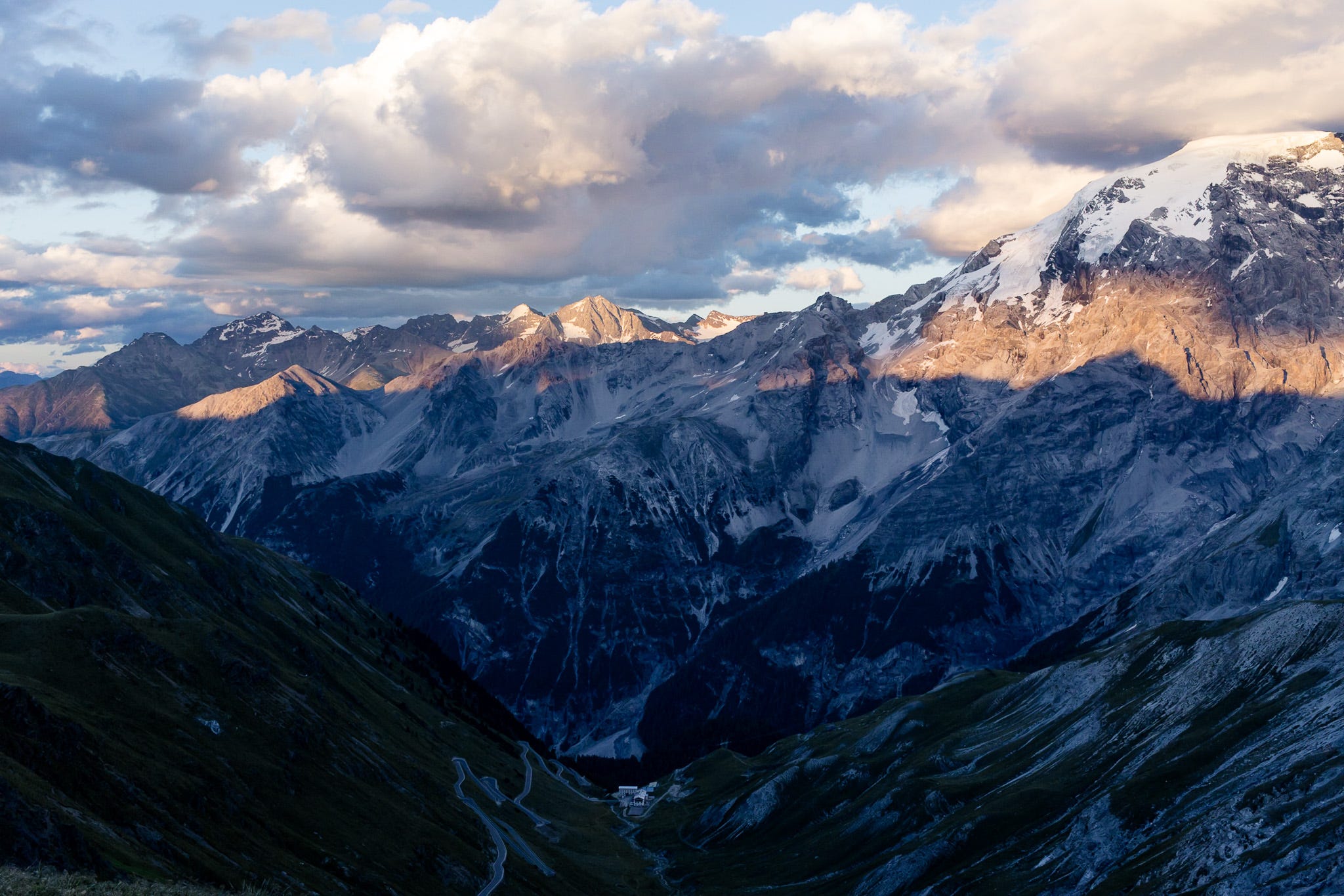
Italy, in this reading, doesn’t have a single culinary identity. It’s a borderland. And the Alps are the clearest expression of that border: culturally, agriculturally, and gastronomically.
Mountain food isn’t less Italian. Maybe it won’t be as popular and easily recognizable as Italian as carbonara, pizza, cannoli or tiramisu, but it is just as deeply rooted in tradition and, especially, geography and history. It just comes from a different set of needs, a different climate, a different way of living with the land.
With the Winter Olympics returning soon to Italy—between Milan and Cortina d’Ampezzo—it feels like the right time to bring these dishes to the centre of the table. And to do that, I had to silence my impostor syndrome all over again.
Further readings
The Winter Olympics Are Returning to Cortina — Here’s What the Local Mood is Like, from Italy Magazine
A Local’s guide to Cortina d’Ampezzo, from Italy Segreta
Dream Of Italy’s Insider Tips For The Winter Olympic Games In Italy, Forbes Magazine


A different Italy: eating through the Alps with four recipes
Two come from Cucina Povera—pizzoccheri from Valtellina (page 157) and casunziei from Cortina d’Ampezzo (page 214)—both rooted in winter, both linked to Olympic towns.
The other two are from my personal archive: apple fritters, perfect for a snowy afternoon, and a rustic buckwheat cake, naturally gluten-free and rich in flavour.
These four recipes are four ways of surviving winter with joy.
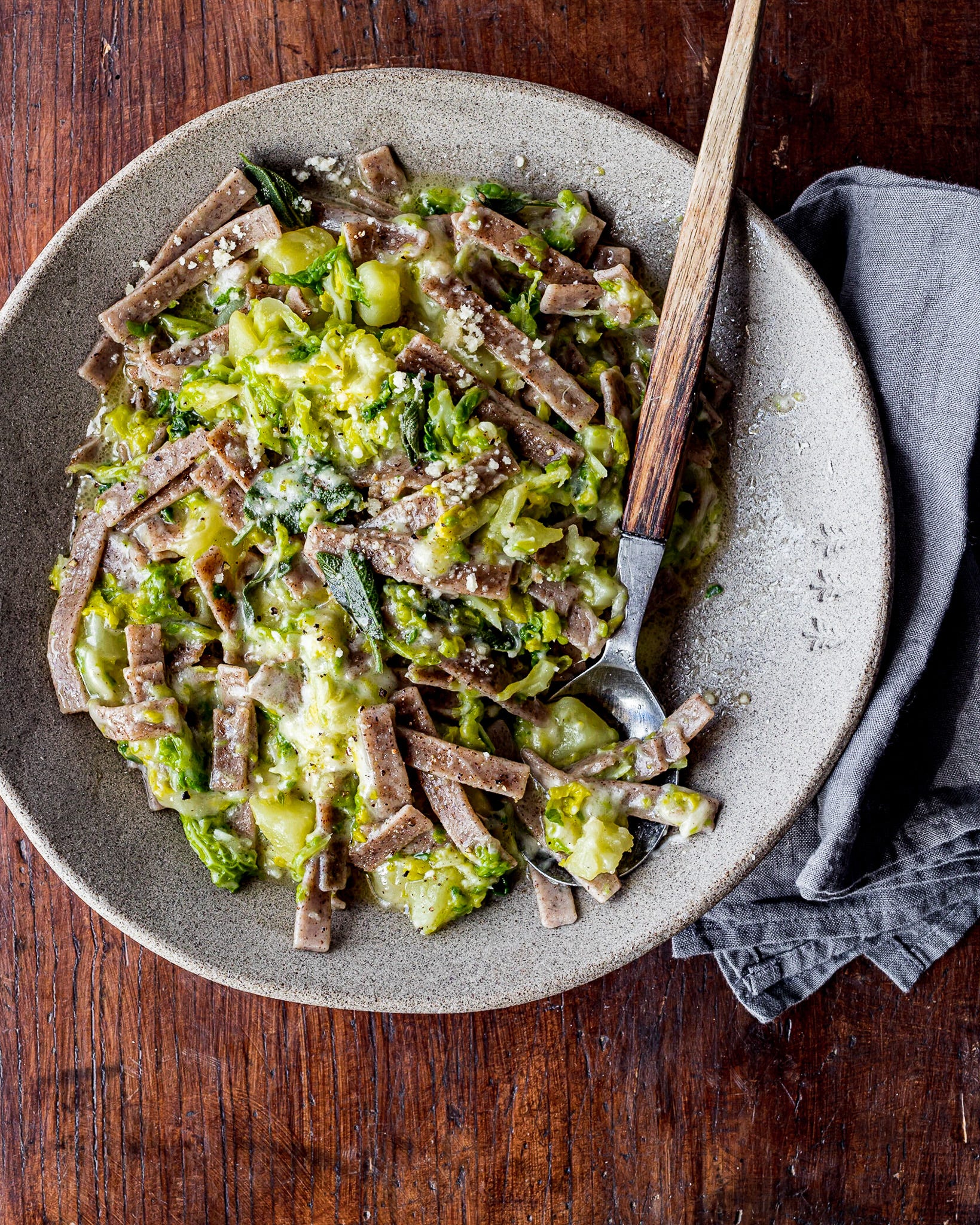
Pizzoccheri. Pizzoccheri was a festive dish for peasants, made of short buckwheat tagliatelle cooked in salted water with potatoes, savoy cabbage, chard, or chopped green beans, according to the season. Once drained, the pasta and the vegetables were layered in a tray with plenty of cheese and butter, and briefly heated until the cheese had turned the pizzoccheri into a delicious mess of buttery potatoes and soft cabbage.
Casunziei. Wrapped in a paper-thin sheet of fresh pasta that gives a glimpse of their filling, casunziei also change color from season to season. In winter they are mostly ruby red, colored by a filling of beets, potatoes, and poppy seeds.
Apple fritters. You bite into the soft, mellow apples enshrined in a sugary batter, and finish licking up your fingers. They’re ideal as an afternoon snack, just as the crisp air invites brisk walks among falling leaves, or for dessert to end a Sunday family meal, perhaps with a silky puddle of vanilla custard on the side.
Buckwheat cake. Buckwheat was introduced into Italy in the late 14th and early 15th centuries. It grows well in cold mountain regions, so it soon became a staple for the Alpine area. It is used to make polenta, pizzoccheri, focaccia, and this incredible cake, naturally gluten-free, rich with butter and a grated apple.
Behind the paywall, you’ll find two recipes—casunziei and pizzoccheri, both from Cucina Povera—along with step-by-step notes and substitution tips for those cooking outside Italy. These are perfect weekend dishes, especially if you're snowed in or simply craving something alpine.