

Ciao, and welcome back to Letters from Tuscany! Did you have a good weekend? This week Livia is starting elementary school, so our life at the moment revolves around new notebooks, a brand-new Lilo&Stitch backpack, perfectly sharpened pencils, a school diary (her first! How exciting), and the smell of freshly printed books.
And since September always feels like the first blank page of a new notebook, it seemed like the right moment to introduce our 2027 cooking class season, along with a few exciting new things.
One of them is a special collaboration with The Genuine Experience, a Europe-based travel company, for a week-long program that will take us to some of my favourite places here in the Val d’Elsa and along the Tuscan coast.
A few quick notes before we start:
Cook-alongs are back! Next week I’ll send you the recipes for two cozy pasta dishes for the first cold nights, and all the details to join us, but for now save the date for our first one: Sunday, September 27 at 9pm CEST / 3pm EDT / 12pm PDT.
You can listen to this newsletter as a podcast while you’re cooking, walking, or driving to work, or read it and explore all the links. It’s packed!
Keep reading to the end for a special early-bird offer on our 2027 cooking classes.
Google is still not indexing our blog, which means it has become much harder for new people to discover our cooking classes. Thankfully, after sixteen years of teaching, we’ve built a wonderful network of past students and friends, we have brilliant reviews on Google and TripAdvisor, and word of mouth is still helping new guests find their way to our kitchen. If you know someone planning a trip to Tuscany, sharing this newsletter with them would help us enormously.
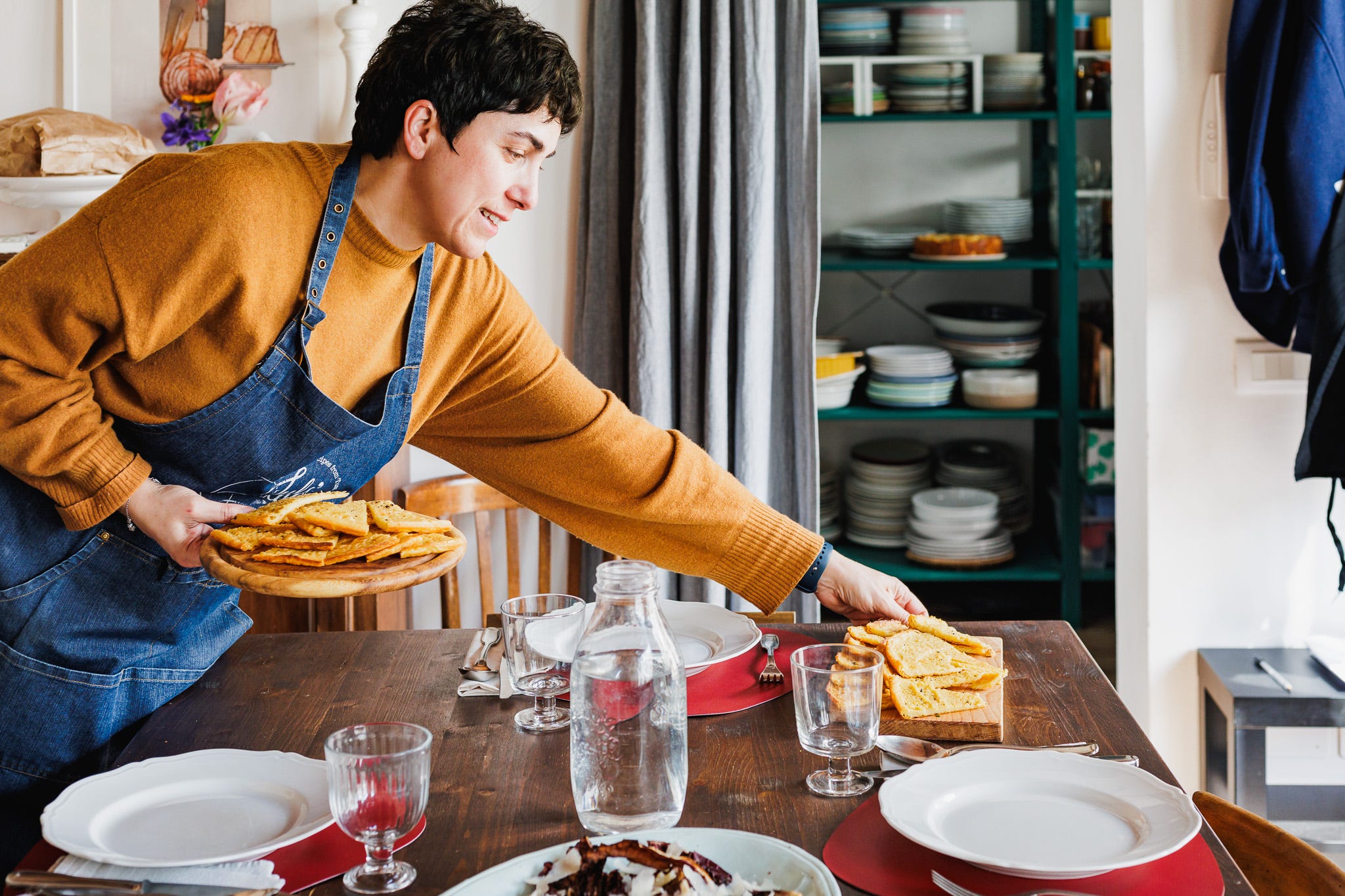
I’ve been writing recipes for a living for more than fifteen years, for most of my adult life. I first shared them on my blog, then in cookbooks in both Italian and English, and now here, in this newsletter. I take pride in the precision of my recipes, in the fact that they are thoroughly tested. I use a scale, but also cups and tablespoons when needed. I measure baking tins and pans with a wooden ruler, and I set a timer so I don’t underestimate how long it really takes to caramelize an onion (usually much longer than people tell you).
And yet, when I teach an in-person cooking class—or when we meet for one of our live Sunday cook-alongs—part of my job is to take my students in the opposite direction. Following a recipe is not enough: you need to observe, taste, touch, make decisions, change your mind, retrace your steps, and sometimes start again.
Often, during a cooking class, we put a tray of vegetables in the oven, topped with breadcrumbs, herbs and Parmigiano, and my students, notebook and pen in hand, ask me: how long? Or when I dress a panzanella and pour in olive oil by instinct, they often ask: how much olive oil?
Most of the time, my answer is: it depends (but not for what you think).
It depends on how thinly we sliced the vegetables before putting them in the oven, on how fresh the bread was, on how much flavour the tomatoes in the panzanella have, and on when we plan to serve it.
Recipes are necessary, and I’ll be the first to say so. They are maps, memories, a distillation of poetry and science. They can be read like novels or historical essays. They can hold a family together from one Sunday to the next, or they can become the source of scandal, schism, even heresy—the moment when someone reclaims their own taste and identity.
When they are well written, recipes can take you by the hand in a kitchen far removed in time and place from the one in which they were first created. They help prevent mistakes, and offer solutions when mistakes happen.
But there is more to cooking than that. There is a sensory, almost narrative dimension that once belonged to the oral transmission of knowledge from one generation to the next: a memory held in gestures, a kind of subtext that, even with the best intentions, can be difficult to capture in a single written recipe. During a cooking class, this is the dimension I rely on most.
So come with me for a cooking class…
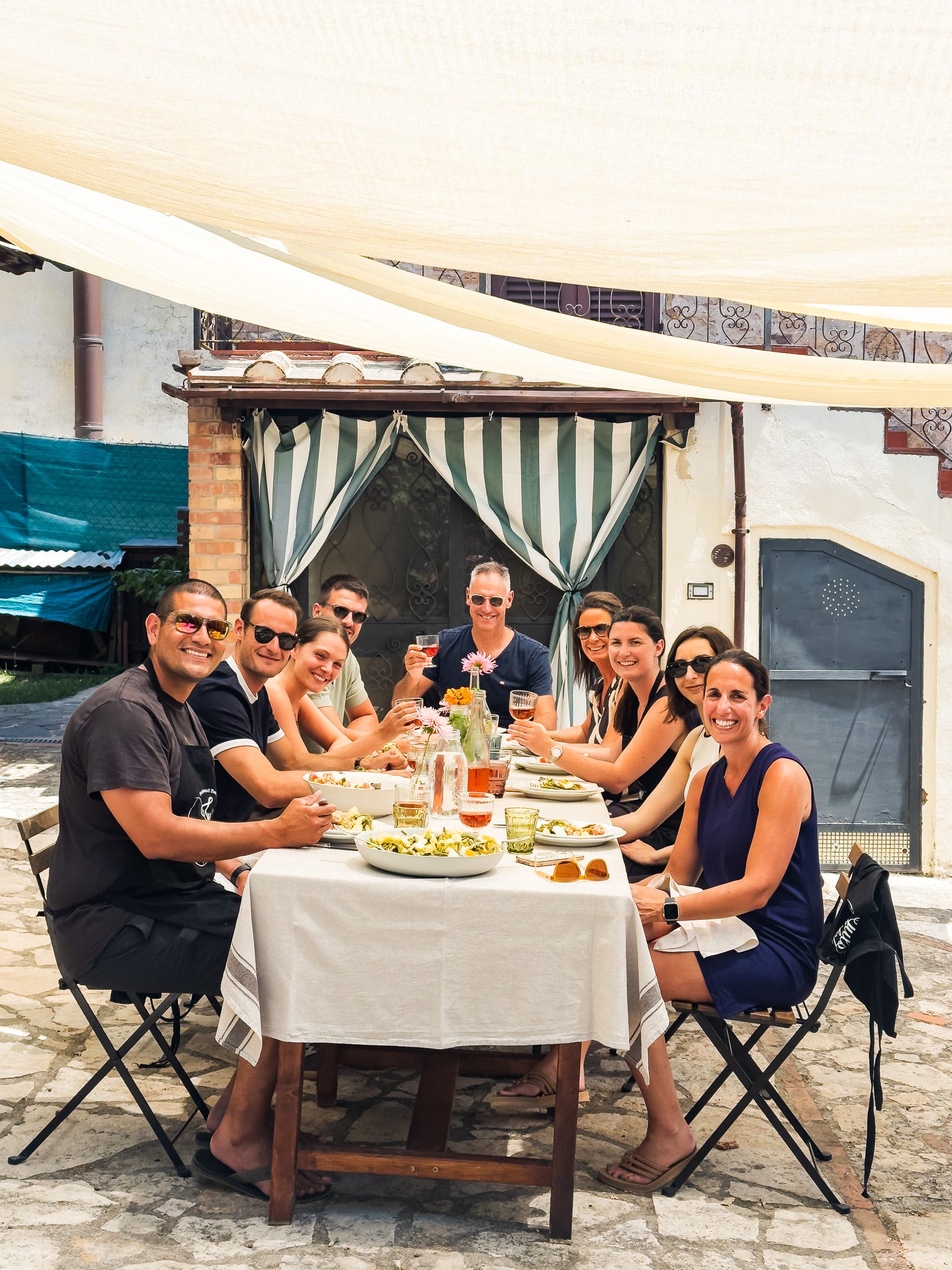
Eight strangers meet one morning at a café. They come from the United States, Canada, the Netherlands and Australia. A couple on their honeymoon, a family on holiday, two friends in Tuscany to celebrate their sixtieth birthdays, a solo traveller spending a month travelling around Italy. Some have only a vague idea of who I am and what we are about to do; others arrive with a copy of Cucina Povera bristling with Post-it notes.
On the surface, they have very little in common. But little by little, as the morning unfolds, they start getting to know one another and realise that at least one thing brings them together: a love of food, and the desire to have a different kind of experience, one built around a really good meal.
When we first meet, I still don’t know exactly what we are going to cook, but we sketch out a list of possibilities. At the market, some ideas are discarded: perhaps I don’t like the look of the zucchini that day, or the apricots are already past their best and we’ll have to wait until next June to find them sweet and juicy again.
We come home with a menu, and a rough plan for how to get there.
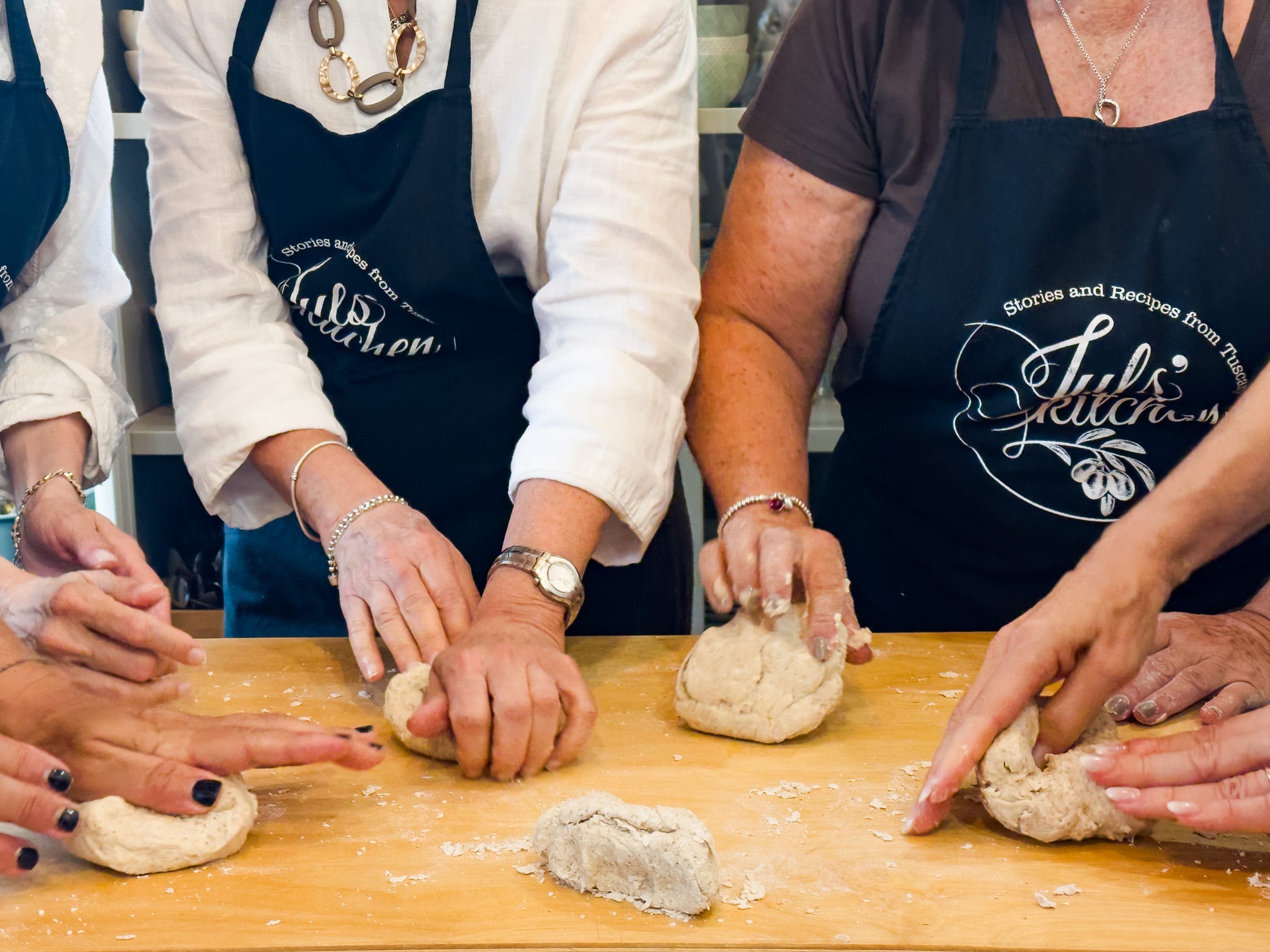
Once we are all gathered around the table—aprons tied, hands washed, an extra coffee sitting on the kitchen counter for anyone who still needs a little more caffeine to fight the jet lag—we begin to cook the way you do in a family kitchen, sharing chopping boards, knives, tasks and stories.
Something inevitably doesn’t go exactly as planned, but that’s all right: it can usually be fixed. Sometimes we have to improvise, and that improvisation never feels like chaos. It becomes another chance to learn something, even if it is simply not to panic when the mascarpone turns lumpy in the tiramisù, or the mayonnaise splits (both true stories).
What I teach, beyond recipes made up of grams, timings and instructions, is to look before deciding: to notice the little pools of deep red oil rising to the surface of a ragù when it is finally ready; to smell a sauce and realise, even before tasting it, that it needs a little more salt; and, fundamentally, to use your senses.
Being fully present while we cook not only helps us avoid dropping a sharp knife on our feet or grabbing a scorching hot baking tray with bare hands, it also allows us to enjoy that moment more fully, and little by little it teaches us to trust our own abilities a bit more.
You learn to make a decision even when you are not entirely sure, to recover from a mistake, and to cook for the people right in front of you, with their tastes, preferences and needs.
Over these sixteen years of teaching cooking classes, I have realised that almost everyone arrives with the same fear: doing something wrong. Some don’t like cooking eggplant because they fear it will turn out spongy and greasy. Others are intimidated by fresh pasta because they worry they will never manage to roll it thin enough, or that it might tear.
Some declare they are simply not bakers because they don’t like measuring ingredients, while others feel completely lost when they have to come up with a recipe based on whatever they have in the fridge. Everyone is scared of using too much olive oil, too.


As we learn early on at school, confidence comes with practice and from getting things wrong.
The point is not to learn how to cook without recipes—I would never say that; I’d be shooting myself in the foot!—but to learn when you can stop following a recipe blindly and start trusting your own instincts.
I don’t believe instinct can be taught in a single morning, but I like to think that, by becoming a little more comfortable with uncertainty, my students can learn to trust their senses, improvise, adapt a recipe when needed, and solve problems as they arise.
That is exactly what I love about cooking. It can be rigorous and creative at the same time: you can surrender to a recipe you trust, or improvise according to the season, your tastes and what you need in that particular moment. All of these things come into play during a cooking class.
So when we welcome students into our kitchen, they may arrive wanting to learn how to make fresh pasta, or a simple tomato sauce “the way you make it at home”, but they leave with more self-confidence and curiosity in the kitchen. And, hopefully, no longer afraid to use olive oil like a Tuscan cook.
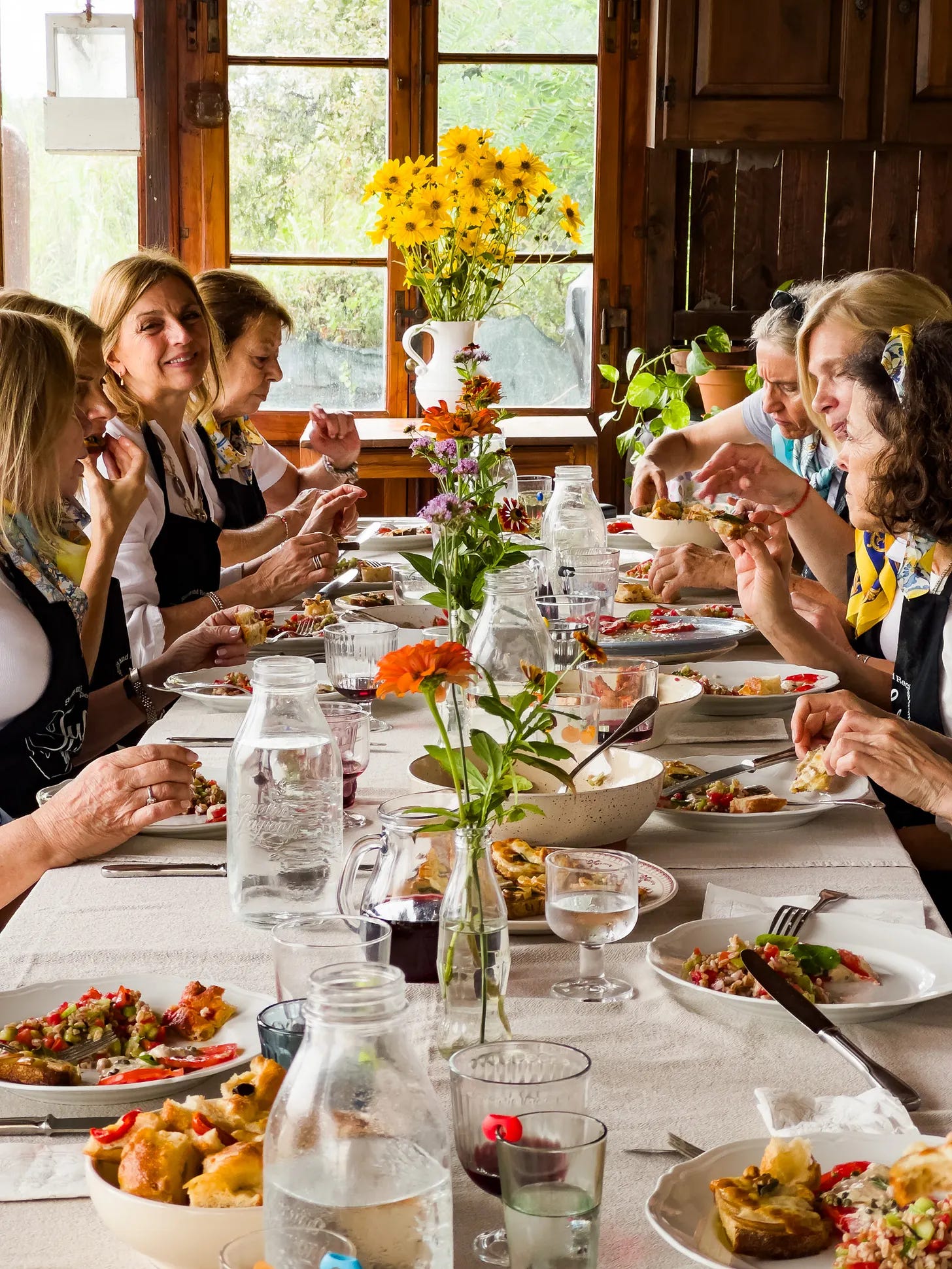
This is exactly what I hope to keep sharing with you in our kitchen in 2027.
In 2027, we will continue to welcome you to the Juls’ Kitchen Studio, in the Tuscan countryside between Siena and Florence, where we live and work. Our classes will remain intimate, with menus shaped together that morning and ingredients chosen according to the season.
I can’t tell you today exactly what we will be cooking during a market class in May or October, and this is why every class is so unique.
If you want a preview of what we will be cooking in September, you can have a taste by cooking bread-stuffed round zucchini and peppers—which make everyone fall in love with such a simple recipe, made with day-old bread—, potato gnocchi, dressed with a slow simmered Tuscan ragù, and roasted pork loin with apples. You’ll find all the links to these recipes with even more inspiration in the archive newsletter A Year in a Tuscan Cooking School: September.


Our 2027 cooking experiences
Market to Table Cooking Class (Wednesday)
In the early morning, we will meet for an Italian breakfast at a local café: we will get to know each other chatting over a selection of pastries, and enjoying a cappuccino, espresso, or macchiato. Then, we will shop together at the local market for fruit and vegetables, and we will visit the local butcher. This will give us the chance to create the menu together, picking just the freshest local ingredients. You will learn how to choose and use the best seasonal products.
After the market, we will drive to our kitchen studio in the countryside, where we will cook together a Tuscan seasonal feast, working on a traditional menu, from appetizers to desserts. Fresh pasta is always included.
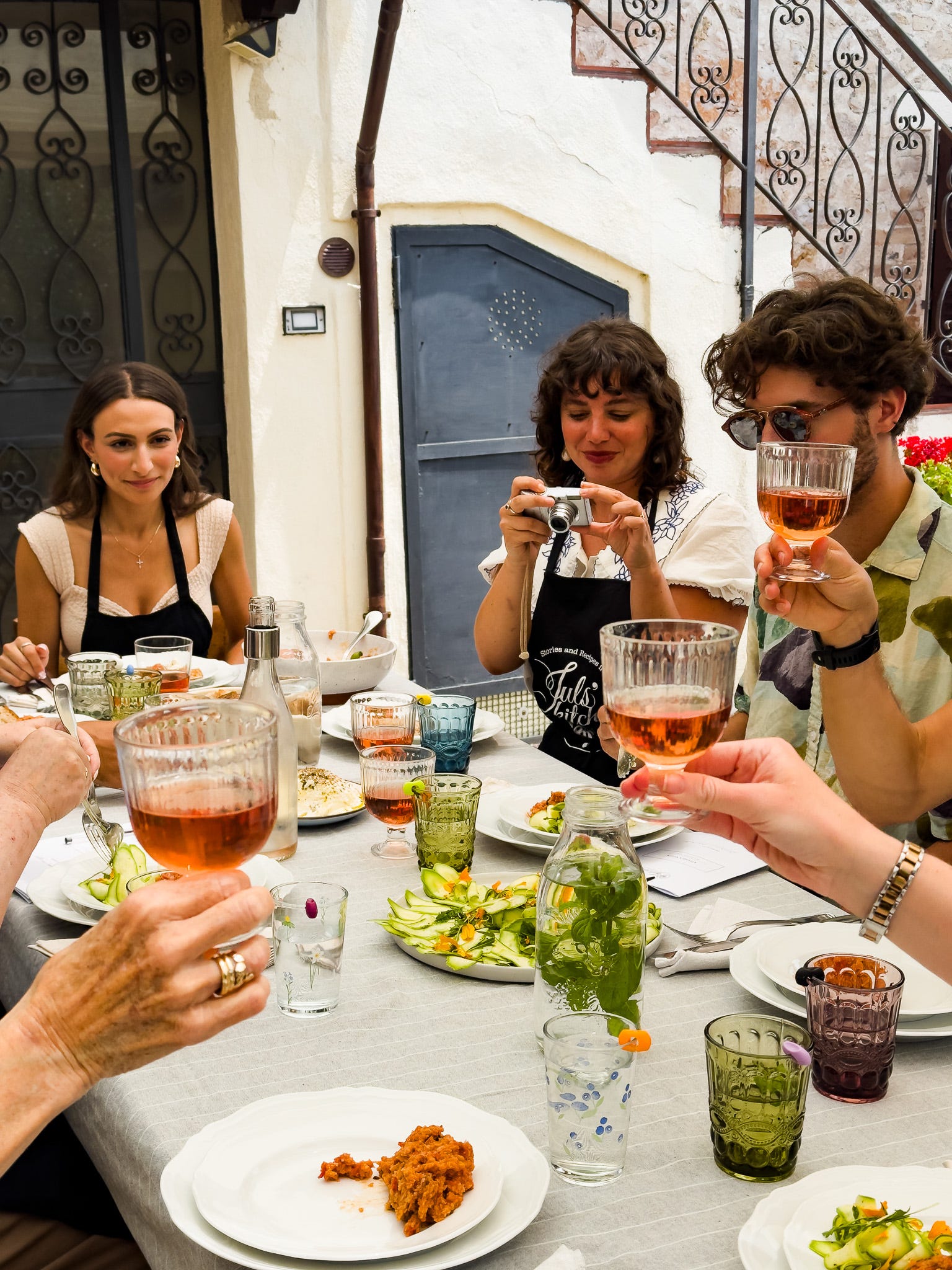
The class will end with lunch, that according to the weather, will take place in our olive garden or in the studio.
Vegetable-Forward Cooking Class (Thursday and Friday)
Join us in the morning at our kitchen studio, nestled in our family home in the Tuscan countryside. We begin the day with a moka pot full of steaming hot coffee and a couple of biscotti to dunk.
This class is dedicated to showcasing the beauty, versatility, and deliciousness of vegetables in traditional and creative Italian recipes. Inspired by what’s in season, we’ll prepare a whole meal from scratch using only the freshest local produce, herbs, and pantry staples.
You’ll learn techniques for coaxing out deep flavour from humble ingredients and discover how to make vegetables the true stars of the table, just as many Italian home cooks have done for generations. We’ll close the meal with a dessert bursting with seasonal fruit. Together, we’ll make fresh pasta and explore new ways to bring color, variety, and nourishment to your everyday cooking.
The class ends with a relaxing lunch, either in our olive garden or inside the studio, depending on the weather.
Three-Day Masterclass (Wednesday to Friday)
The motto of our three day masterclasses is cook more, stay longer, go deeper.
Embark on a tantalizing journey through the flavours of Italy with our immersive three-day seasonal cooking masterclass. With more time on our hands, we will be able to make recipes that require a longer preparation and that usually are not included in the one-day experience, we will bake bread or focaccia, try traditional torte da credenza (pantry cakes), jams, and preserves, cook our beans from scratch, learn our way with leftovers and the practical aspects of Italian cooking.
On Wednesday, we’ll plan our menus for the three days based on seasonality and on your preferences, and we will shop at the local market and butcher.
Whether you’re a seasoned chef or a passionate home cook, this experience will ignite your passion for Italian cuisine and leave you with a newfound culinary repertoire.
Each class will end with a relaxing Italian-style lunch. In the afternoon you’ll have time to explore the surroundings, following our foodie guide.
Masterclass Dates 2027
MARCH 16-19: 4-days Tuscany, Liguria & Apulia Masterclass, with my friends and colleagues Flavia Giordano and Enrica Monzani [SOLD OUT]. A waiting list is already open for 2028.
APRIL 6-12: Tuscany at the Table with Giulia Scarpaleggia [by The Genuine Experience]. During the first three days in Val d’Elsa, we will be your hosts. In our countryside kitchen, you’ll enter the rhythms of the Tuscan table: shopping at the market, making fresh pasta by hand, following the season, and sitting down to generous meals. From there, the journey unfolds toward the sea, through Bolgheri’s wine country, the Etruscan shores of Populonia, and finally Rome, where the week closes with one last celebration of food, culture, and Italian conviviality. [6 spots available]
MAY 26-28: Fresh Pasta Masterclass—handmade pasta from Tuscany, and beyond
SEPTEMBER 29 – OCTOBER 1: Harvest Season—in between summer and autumn
Explore our cooking classes and masterclasses on our blog, learn more about how it works, check availability and book your spot!
Check the calendar for our availability, or reply to this email to have more info.
Early-bird offer for our 2027 cooking classes
If you’ve been thinking about coming to cook with us in 2027, we wanted to give the Letters from Tuscany community a small head start.
Book any of our one-day cooking experiences or three-day masterclasses by the end of December 2026 and you’ll receive 10% off.
Subscribe to this Newsletter to get the discount!
A small thank you for being here, reading along, and following our kitchen from afar.

From the emails we receive, I know that many of you will go home and keep cooking from my recipes for years, sharing them with friends and family.
But I also hope, and actually I’m quite sure about it, that one day you might open the fridge, find two zucchini, a few eggs and a piece of pecorino, and without looking for a recipe you’ll think: let’s see what I can make with this.


Casa Marcella Updates
There’s still quite a bit of dust lingering around Casa Marcella. Tommaso has started working on the bathroom, removing some of the old tiles to give it a fresher, more modern look.
In the meantime, though, the bedroom is starting to come together: we have a new bed and bedside tables, with enough sockets for reading lamps and charging your phone. Livia loved helping Tommaso put the bedside tables together.


