
A recipe exchange, pantry staples, and juniper pork chops with pillowy apricots
A cross-continental recipe swap with Melina Hammer, from Tuscany to the Hudson Valley


I’m thrilled to announce a special exchange of flavours and stories with fellow seasonal‑food enthusiast
, author of Stories from Catbird Cottage. Melina is an award‑winning cookbook author, recipe developer, food stylist and photographer, based in the Hudson Valley, where she runs her home and B&B, Catbird Cottage. I’ve been following her on Instagram for years, ever since she was shooting for Sweet Paul Magazine. I was first drawn to her fresh, vibrant approach to photography and food styling, then slowly fell in love with her lush, nourishing, deeply seasonal food. I was very pleased to find her here on Substack, too.Her work is firmly rooted in a deep love for where ingredients come from and how a meal can reflect a place and a moment.
This resonates deeply with my approach to food: the rhythm of the land, the changing seasons, the sense of gathering around a table with people you care about. We share an ethos of slow cooking, seasonal sourcing, and everyday rituals. She’s an expert forager, while I’m taking my first steps into recognising the wild herbs that grow around my house, along hedgerows, under oaks, and at the edges of the woods.
We recently met for a live talk here on Substack, where we chatted about our pantries and the ingredients we love the most. If you missed the live, you can rewatch it here.
If you find joy in cooking that’s intuitive, sensual, and deeply connected to the rhythms of nature, then you’ll love Melina Hammer’s world. Her newsletter offers a glimpse into a slower, more intentional way of living and eating, filled with stories from her Hudson Valley cottage and vibrant seasonal recipes.

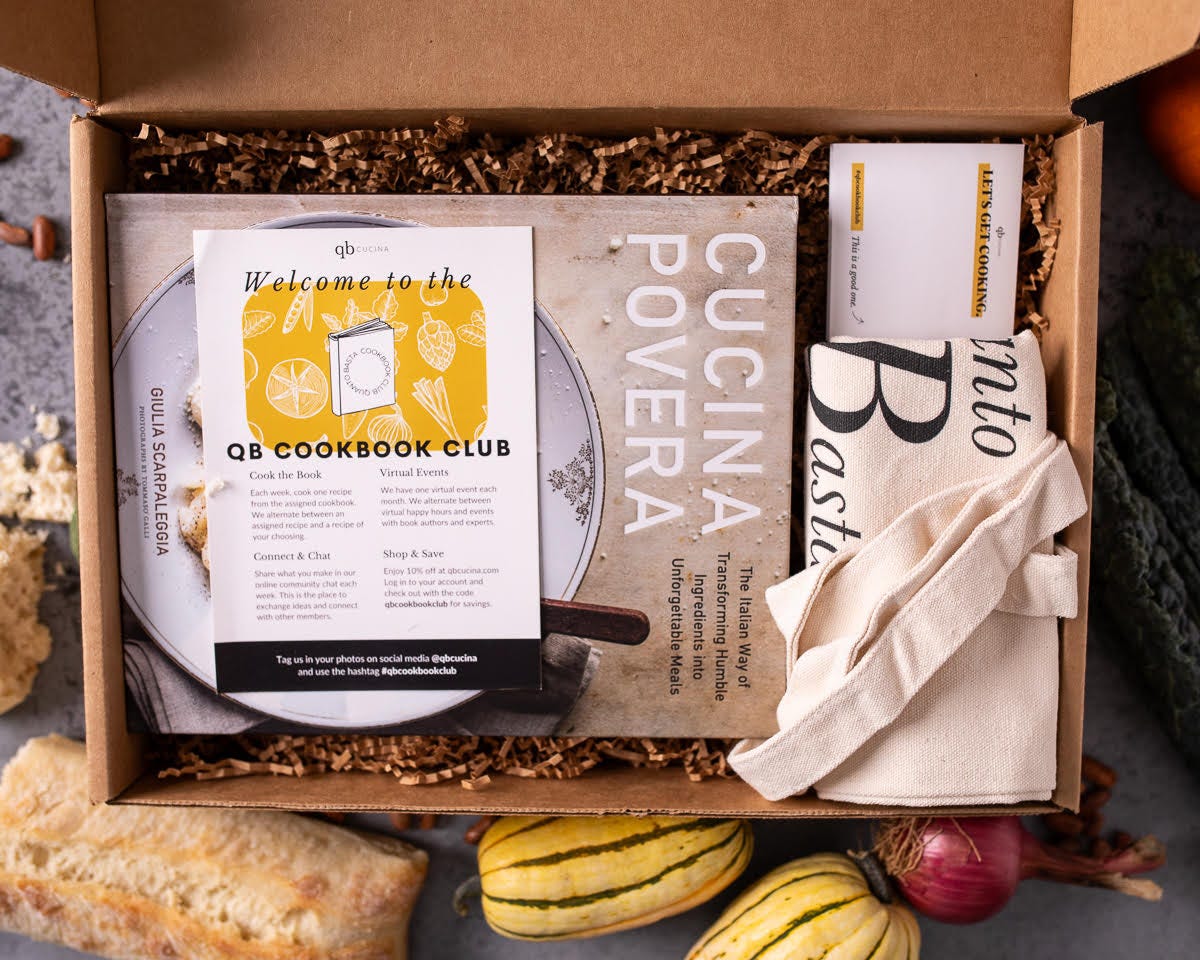
Before I leave room to Melina, I wanted to share a little something special. My friends at q.b. Cucina are inviting new members to join their Italian Cookbook Club — a cozy community of home cooks who gather virtually around a new Italian cookbook every two months. I’m so honored that they are featuring Cucina Povera as their book pick this November & December.
Although registration is closed for the Cucina Povera round, they’re offering my readers a giveaway for their next cookbook pick! If you sign up by November 30 using the code JULSKITCHEN, you’ll be entered to win two months of your membership refunded (applicable to both bimonthly and annual memberships). It’s a small grazie for keeping the spirit of Italian cooking alive in your own kitchen. Join the club here. Winner will be randomly selected and receive their refund on December 1, 2025.
And now, to Melina and her recipe…

Hello Letters from Tuscany readers and community!
I am delighted to be trading places with Giulia today. After our live talk here on Substack earlier this week—both of us delving into pantry staples that bring us comfort as we head into winter—I used the occasion to review the shelves in my pantry and thought, why not use today to reach for a couple things I love, but do not always think to use in day-to-day cooking? I imagined a cozy dinner with friends around the table and chose dried fruit and a seasonal spice. This is a new take on a meal that I’ll most definitely be returning to again.
Today, I’m sharing a brand-new recipe - juniper pork chops with pillowy apricots.
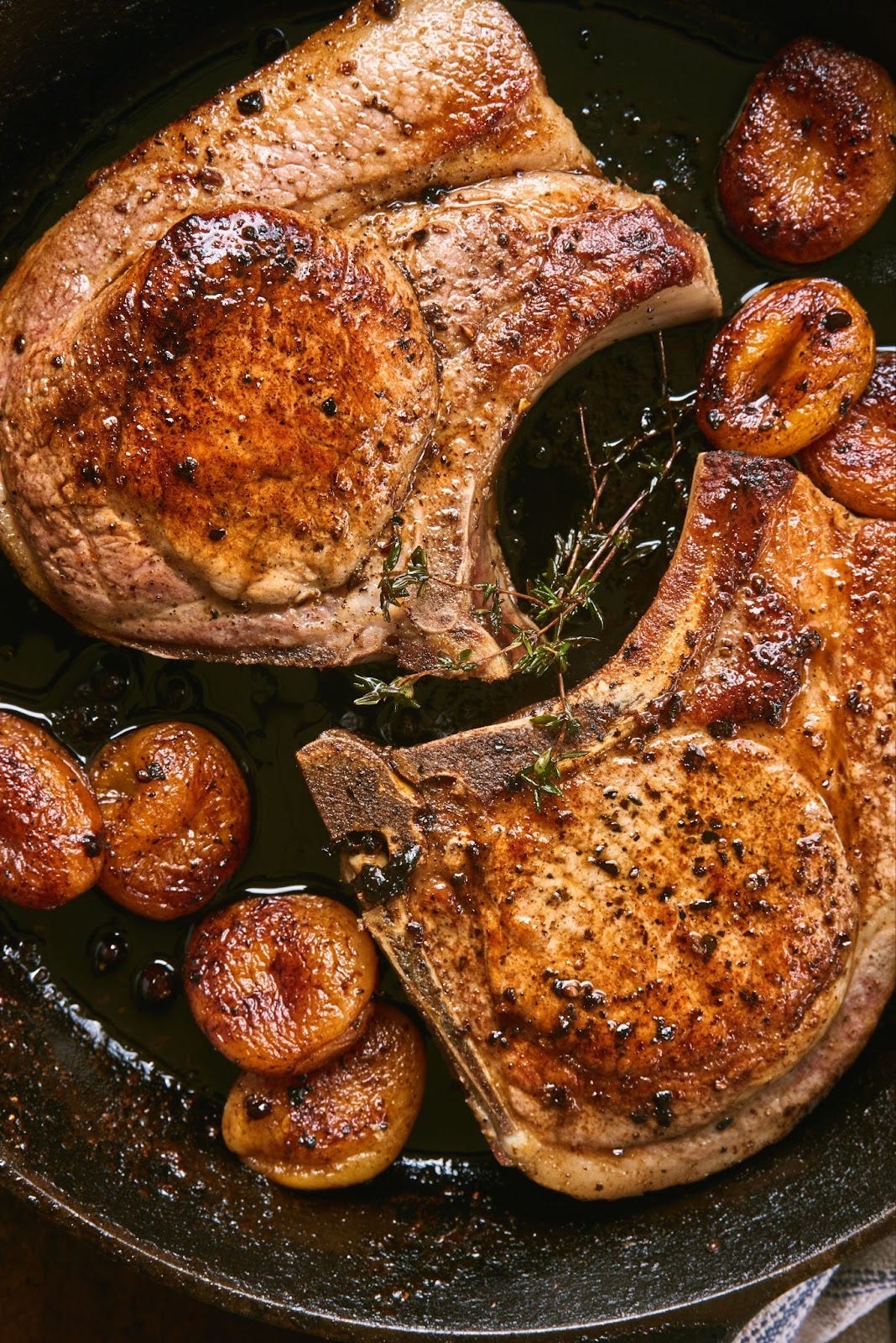
I most often cook humble fare day-to-day. This dish registers as special food in my home, and is perfect for fall and winter entertaining. Here, sweet and savory flavors meld with the piney, slightly citrusy quality imparted by juniper berries. Dried apricots turn plump, juicy, and tender through the marinating and cooking process, and I seared the chops to medium to retain their succulence. Incorporating juniper into both the apricot marinade and the loose paste for the chops infuses everything with a mellow, caramelized herbal sweetness once all are finished in the pan. Together, they’re a match made in heaven. All you need to do is invite friends or family over for an elemental, riveting meal.
What are juniper berries?
They are the female seed cones from eastern red cedar trees, found broadly across North America and Canada… Not berries at all, in fact. Juniper berries ripen every couple years, in fall, and where I live in the Hudson Valley, there are numerous trees on one of my bike routes that become laden with fruits. Through the progression of the seasons the berries develop, turning from a waxy green to rich blue... so blue I can spot them from several feet away.
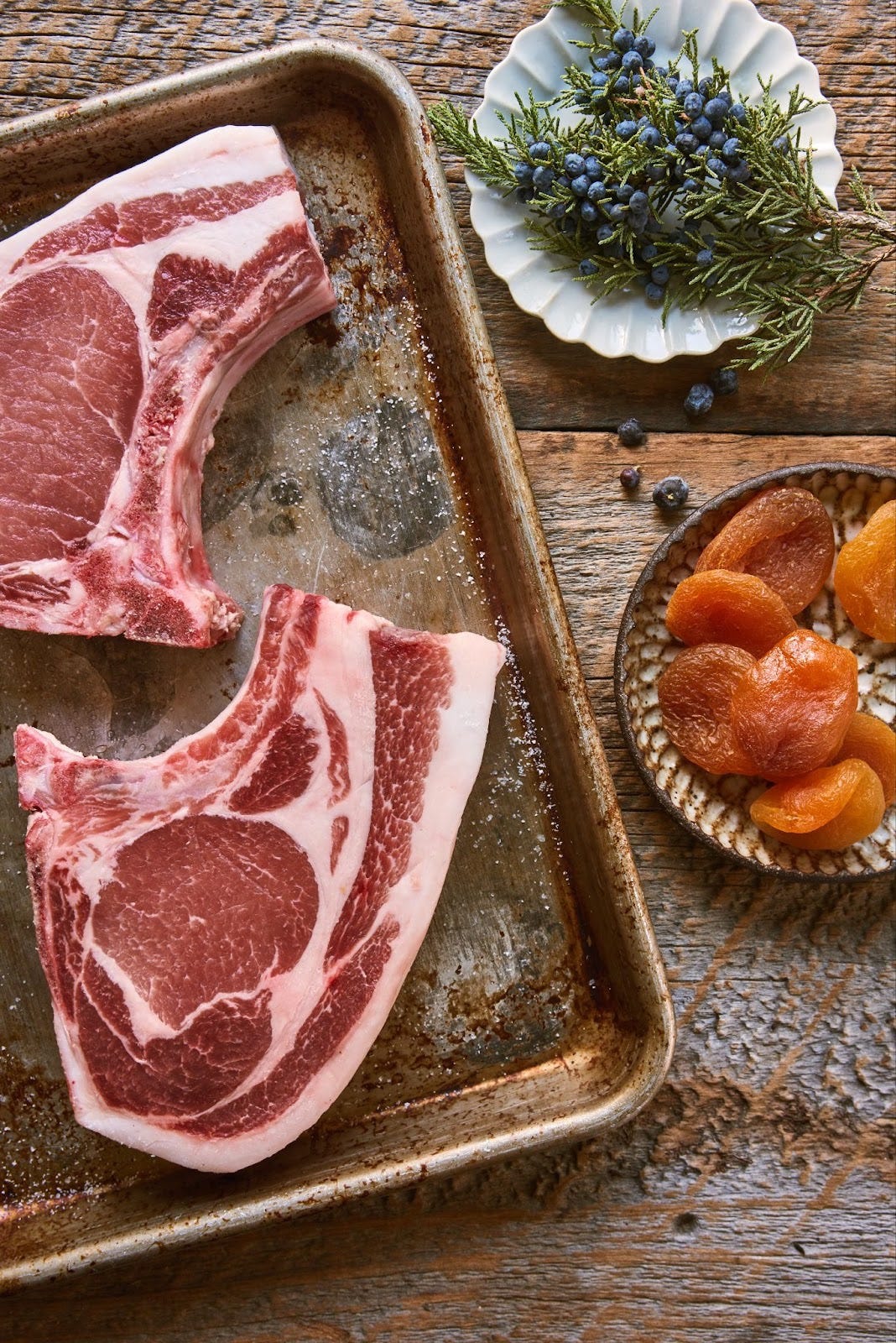
Over the years, foraging for wild foods has become more a part of my life. It grounds me to the present moment (and keeps me sane), and it’s a way to connect to the landscape - a kind of listening. Wild foods are also free, nutrient-dense, and delicious! As mentioned in the conversation with Giulia, I try to make a point of preserving the seasons, both from the garden or market, as well as the wild. Herbal salts and other condiments, floral syrups and sugars, various pickles and ferments, and dried harvests. All of these help keep my pantry full and diverse, all year ‘round.
For a bigger keyhole into how to identify wild foods - and when-to-find-what - there’s a whole chapter in my book A Year at Catbird Cottage that dives into foraging. There are also two installments over on my newsletter which describe many wild foods, plus various ways to harvest and enjoy them.
Ways to use juniper berries
Once they’re harvested, juniper berries are easily kept for a year or more, stored in a glass jar in the pantry. If you do not have access to juniper trees where you live, the berries can readily be found online or in specialty markets. They are a versatile spice that deserve greater prominence, and add unexpected magic to many things:
cookies and baked goods. In this shortbread recipe, I crushed juniper berries to make a fragrant sugar, then sprinkled it onto shortbread before baking.
cured fish and braises. With this cured salmon, juniper berries and other spices impart subtle citrusy, piney notes to the satiny fish. They also bring nuance to braised cabbage and pork, rillettes, and roasts.
an excellent crust for pan-seared venison, pork, and lamb.
infusing spirits, such as vermouth and gin.
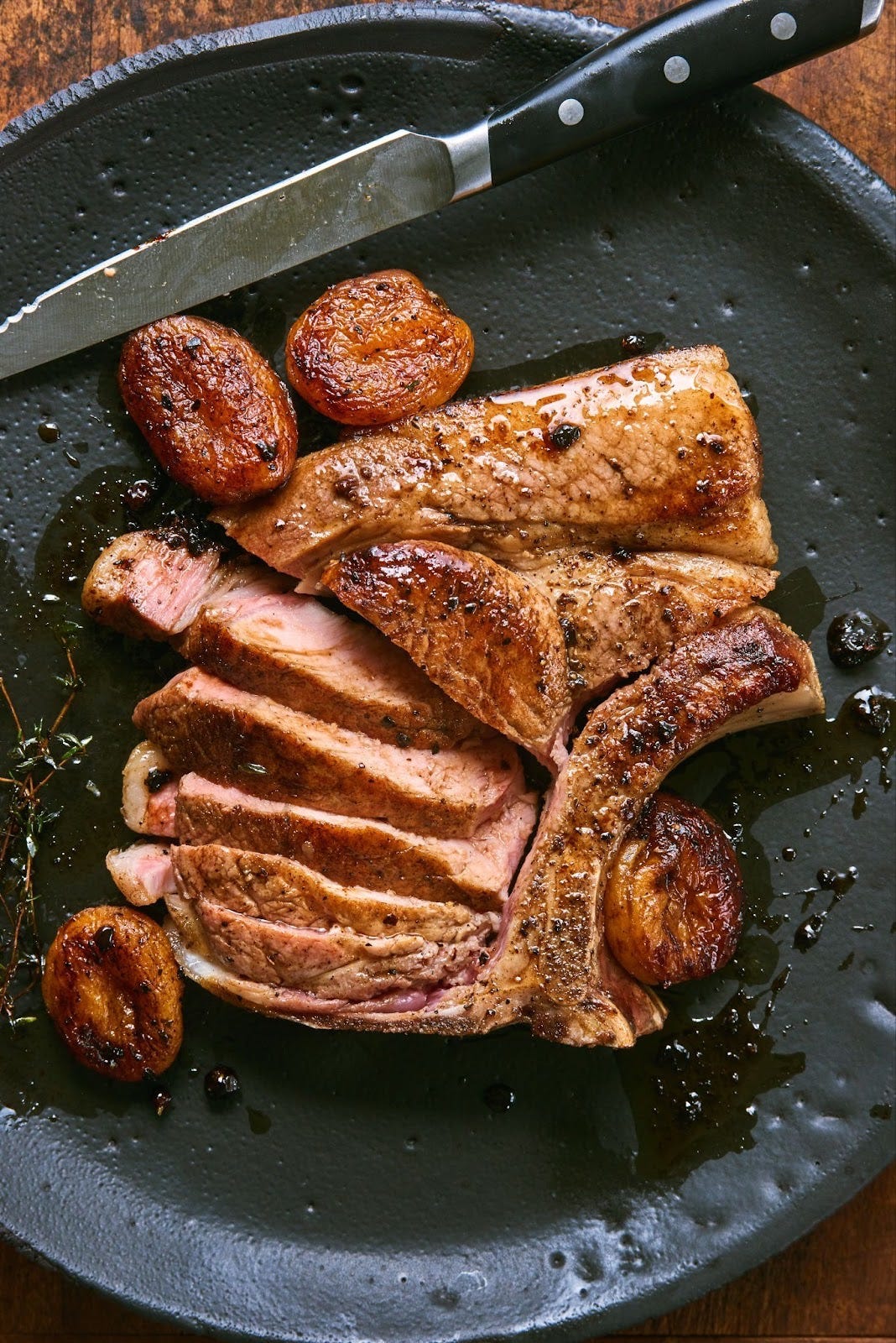
RECIPE - Juniper pork chops with pillowy apricots
I most often cook humble fare day-to-day. This dish registers as special food in my house, and is perfect for fall and winter entertaining. In this recipe, dried apricots turn juicy, tender, and plump through the marinating and cooking process. The chops are cooked to medium to retain their succulence, and the two together are a match made in heaven. It’s the perfect kind of dish for having friends or family over, for an elemental, riveting meal.
Serves 2
For the apricots
8-12 dried apricots
1/2 cup water
2 tbsp rye whiskey
1/2 tsp juniper berries
1/4 tsp kosher salt
Few grinds of black pepper
To assembly
2 1 1/2-inch (3,8 cm) thick pork chops, with 1/4-inch thick fat cap
3/4 tsp juniper berries, chopped into a coarse meal
1 tbsp extra virgin olive oil
4 thyme sprigs, one tied around the rest to secure them into a bundle
Freshly ground black pepper
Pinch kosher salt
The day prior to making the dish, arrange the pork chops on a rimmed tray and season with kosher salt. Place it uncovered in the refrigerator. This acts as a dry brine and will draw out moisture, producing a richer crust when it comes time to sear.
At the same time, marinate the apricots: Combine the water, rye, juniper berries, salt, and black pepper in a small saucepan and bring it to a simmer. Remove from the heat and add the apricots. After a half hour or so, transfer them to a wide sealable container, turning the apricots over so each absorbs more of the liquid. Seal and refrigerate overnight.
The next day, bring the pork chops and apricots to room temperature a half hour before cooking.
Combine the chopped juniper berries, black pepper, salt, and olive oil in a small bowl. Spread a quarter of the mixture across the face of each chop, reserving the remainder.
In a large cast iron skillet set over high heat, sear the pork chops, fat cap side down for 2 minutes, leaning the chops against the edge of the pan, or against each other in the middle of the pan, and shifting their tilt after a minute to get contact with the entire length, until they develop some color.
Lower heat to medium and place the chops oil-and-juniper-berry mixture side down, searing them undisturbed for 7 minutes. At this time, spread the remaining mixture across the face-up surfaces of both chops.
Turn the pork chops to the second side, add the apricots and thyme sprig bundle, and baste the chops in hot fat for 30 seconds. Turn the apricots after 30 seconds to 1 minute, once they become burnished and golden. Cook the chops for one more minute for medium, then transfer them and the apricots to a serving platter, allowing the meat to rest for 5 minutes.
Add the apricot marinade to the hot pan - it will roil on contact - and reduce the liquid by half. Use tongs to free up the browned bits stuck to the base of the pan as the liquid bubbles.
Transfer the reduced liquid to a small bowl to spoon over top at the table. The pork chops and apricots are great served with a bright salad, or with crusty bread.
 | A guest post by
|
I am so pleased with this pork chop dish (and honestly, triple the apricots - they are SO good you'll find yourself wanting all of them). This was a very special week of sharing, and I cannot wait to make your minestrone. The way you described the layers, and the seasonal variations, brought so much comfort. Perhaps we have a new seasonal series on our hands.... ;)
Really enjoyed the live chat the other day Giulia, and love the look of the recipe - thank you